 TRY LUMEHRA RISK-FREE • FREE SHIPPING OVER $49 (EXCLUDES PO BOXES) • 30-DAY MONEY-BACK GUARANTEE


How Do I Remove Permanent Marker from Fabric: Pro Tips
A child uncaps a marker for two minutes, turns away, and suddenly there's a black streak on a school shirt, a sofa cushion, or the sleeve of a hoodie that was clean an hour ago. That sinking feeling is real, especially when the label says “permanent” and the fabric isn't cheap, easy to replace, or kind to sensitive skin after repeated harsh treatments.
The good news is that permanent marker on fabric often fades or lifts when you use the right solvent, the right direction, and the right amount of patience. Panic scrubbing usually makes it worse. Calm, controlled blotting usually gives you the best chance.
If you're searching how do i remove permanent marker from fabric, think in three parts. First, move quickly. Second, use a solvent that can loosen the ink. Third, lift the stain out instead of grinding it deeper into the fibres. For families dealing with eczema, dermatitis, fragrance sensitivity, or baby laundry, there's another layer that matters just as much. You want stain removal that works without leaving behind a heavy scent or irritating residue.
That Heart-Sinking Permanent Marker Moment
It usually happens at the worst time. You're sorting laundry before school, stripping the sofa cushions before guests arrive, or folding baby clothes when you notice a dark line that definitely wasn't there before. Marker stains feel final because the ink is designed to stay put.
That's why people often make the same first mistake. They grab the nearest wipe, spray, or soap and start rubbing hard. It feels productive, but it often spreads the stain into a larger halo and presses pigment deeper into the weave.
First response: slow down, keep the area dry enough to control, and avoid rough scrubbing.
What works better is less dramatic. Blotting, an absorbent layer underneath, and a solvent that targets the ink are the basics. Sharpie's stain guidance also points to a chemistry-first method: place the stained article face down on paper towels or a clean white cloth and apply stain-removal solution from the underside so the ink can transfer out of the fabric more effectively, as outlined in Sharpie's stain-removal guidance.
Why “permanent” doesn't always mean forever
Permanent marker resists plain water well, but that doesn't mean it resists everything. Alcohol-based products can help loosen the binder and pigment so the ink transfers into the towel or cloth underneath instead of staying locked in the fabric.
For worried parents, that's the key reassurance. You don't need to attack the stain with the harshest option first. A thoughtful method is often safer for the garment, better for delicate skin, and more likely to avoid the frustrating cycle of over-treating, rewashing, and still seeing a shadow later.
What not to do in the first five minutes
A few habits make removal harder:
- Don't rub aggressively. Friction can spread the stain.
- Don't start with full-strength bleach. It can damage fibres and still leave you with ink plus discolouration.
- Don't ignore the care label. Fabric type changes the safest method.
- Don't assume “unscented” means gentle. Some unscented products use masking ingredients, while fragrance-free products are the better fit for scent-sensitive households.
Your Essential Pre-Treatment Checklist
Before you touch the stain, get set up. This is the part people skip when they're stressed, and it's often the reason a small mark turns into a larger cleaning problem.
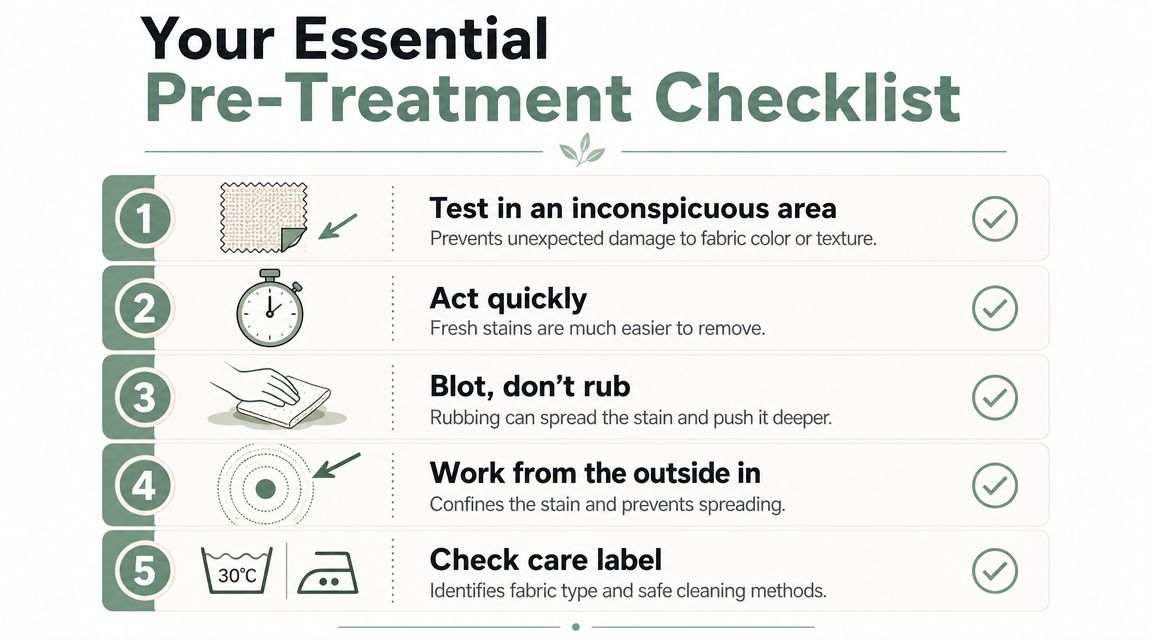
Persil's guidance is especially useful here. It warns that vigorous rubbing can spread the ink and set the stain deeper into the fibres, and it recommends treating the stain promptly before it dries, as noted in Persil's fabric-stain advice.
Gather the right supplies first
You don't need a huge kit, but you do need the right basics within reach:
- Clean white cloths or paper towels so you can see ink transfer clearly
- An absorbent towel or folded cloth to place underneath the stain
- Isopropyl alcohol or an alcohol-based hand sanitizer for durable fabrics
- Cotton balls or a soft cloth for controlled application
- A small bowl of cool water for rinsing after treatment
- Your laundry product for the final wash so loosened residue doesn't stay in the fabric
If you prefer a broader low-residue routine for family laundry, this guide on how to treat stains naturally for families is helpful background reading.
The checklist that prevents damage
Follow these steps before the solvent ever touches the visible stain:
- Read the care label. Silk, wool, and stretchy blends need a different approach than cotton.
- Test in a hidden area. An inner seam or hem is enough; alcohol, vinegar, hairspray, and baking-soda pastes can affect dyes or finishes on some textiles.
- Place absorbency underneath. You want somewhere for the ink to go.
- Work from the back when possible. That helps push ink out of the fabric rather than through it.
- Blot gently. Press, lift, switch to a clean area, and repeat.
A stain-removal method isn't “working” if it removes the ink but leaves the fabric rough, faded, or irritating to wear.
Why blotting beats rubbing
Blotting feels slower, but it gives you control. Rubbing creates heat, friction, and smear. Blotting keeps the stain localised and lets the solvent do the work.
Another useful habit is to work from the outside edge inward when the mark is broad or fuzzy. That helps contain the spread and keeps you from enlarging the stain while you treat it.
Removing Marker from Cotton and Other Durable Fabrics
For cotton, denim, polyester blends, and other sturdier fabrics, the most reliable place to start is usually rubbing alcohol. It's accessible, direct, and well suited to breaking down the ink so you can transfer it out of the fibres.
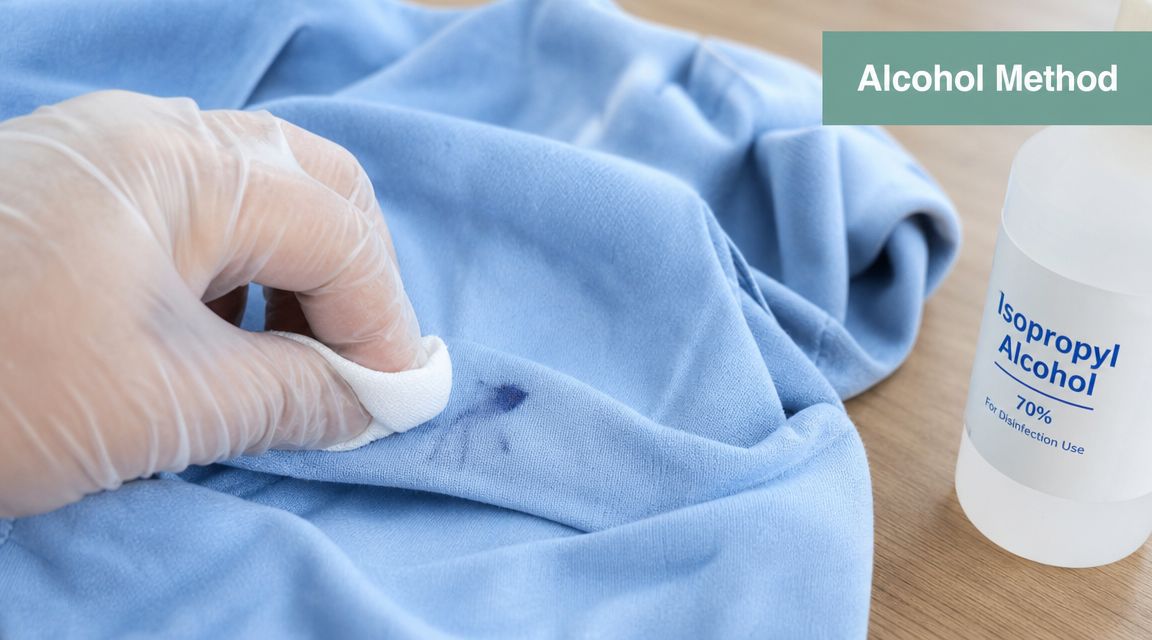
Maytag's appliance-care guidance describes a proven method: place an absorbent towel under the stain, apply isopropyl alcohol from the back of the fabric, keep swapping the towel as ink transfers, then rinse thoroughly and launder in the warmest water the care label allows, according to Maytag's marker-removal instructions.
The most dependable method for sturdy fabrics
Use this sequence:
- Lay the fabric flat with a clean absorbent towel underneath the stained area.
- Apply isopropyl alcohol from the back side of the fabric if you can access it.
- Blot, don't scrub. Use a white cloth or cotton ball so you can monitor transfer.
- Swap the towel underneath when ink starts showing on it.
- Repeat patiently until the stain lightens as much as it's going to.
- Rinse thoroughly to remove loosened ink and solvent.
- Wash according to the care label in the warmest water the fabric safely allows.
What success looks like in real life
Sometimes the stain disappears quickly. More often, it fades in stages. That's normal. Marker removal is usually a transfer process, not a one-wipe miracle.
If you're working on removable upholstery, cushion covers, or family-room textiles, it helps if the piece is easy to wash once the solvent step is done. That's one reason many households prefer machine washable couch covers for high-use spaces where kids draw, snack, and sprawl.
Practical rule: if the cloth underneath isn't picking up ink, stop and reassess before adding more force.
Common mistakes on durable fabrics
These are the errors that waste time:
- Using coloured cloths. Dye transfer makes it harder to see what's happening.
- Pouring too much solvent at once. Oversaturation can spread the stain beyond the original line.
- Skipping the rinse. Residual solvent and loosened pigment can stay in the fabric.
- Washing before enough ink has transferred out. The wash is the finish, not the first move.
A quick visual can help if you want to see the blotting setup in action.
Aftercare matters for sensitive skin
Once the stain has lifted, the final wash matters more than many people realise. If a garment will touch a child's skin all day, or if the person wearing it reacts to fragrances and residues, choose a fragrance-free laundry product rather than one labelled merely unscented. Fragrance-free means no added scent system. Unscented can still include ingredients meant to mask odour.
That distinction matters most after spot treatment, when you're trying to remove both the stain and anything you used to treat it.
Gentle Methods for Silk Wool and Delicates
Delicate fabrics need a different mindset. The goal isn't maximum solvent power. It's controlled lift with minimum fibre stress. Silk can lose sheen, wool can felt or distort, and fine weaves can show water marks if you overwork one spot.
For these fabrics, patch testing isn't a suggestion. It's the step that keeps a stain from turning into permanent surface damage.
How to approach delicates without overcorrecting
Use the mildest workable method, the smallest amount of liquid, and the lightest pressure. Dab. Pause. Check. Repeat. If a label says dry clean only, home treatment should stay minimal and cautious.
Some households try whatever is on hand, including vinegar, milk soaks, or hairspray. These can be useful in limited situations, but they all come with trade-offs. Hairspray, for example, works because of its alcohol content, yet heavily fragranced formulas can leave residue that isn't ideal for sensitive skin.
Gentle Solvent Comparison for Delicate Fabrics
| Solvent | Best For | Technique | Sensitive Skin Notes |
|---|---|---|---|
| Diluted white vinegar | Light marks on some sturdy delicates after a patch test | Dab with a cloth, use minimal moisture, then rinse carefully | The smell usually washes out, but residue should be fully rinsed |
| Milk soak | Small fresh marks on washable delicates | Soak briefly, then blot and wash gently | Mild option, but it can leave odour if not washed out fully |
| Alcohol-based hairspray | Last-resort spot treatment where a patch test is clean | Spray lightly onto a cloth, not directly in excess, then dab | Often fragranced, which can be a problem for scent-sensitive households |
| Minimal rubbing alcohol | Select delicates only after a hidden-area test | Apply very sparingly with a cotton swab and blot immediately | More effective than many gentle options, but more likely to affect dye or finish |
For wool in particular, fabric care matters as much as stain removal. If you're handling a wool jumper, blanket, or blend, this practical guide on how to wash wool is worth keeping nearby.
If the item is expensive, sentimental, or labelled dry clean only, the best home technique may be to reduce the stain gently and stop before the fabric shows stress.
When to stop and call a professional
There's a point where more effort lowers your odds. If the colour starts shifting, the fabric looks shiny or rough, or the weave begins to distort, stop. A professional cleaner may have a better chance of preserving the item than another round of home treatment.
That's especially true for lined garments, formalwear, and anything with unstable dyes.
Troubleshooting Old Set-In Permanent Marker Stains
Old stains are harder because the ink has had time to settle and dry. That doesn't mean you're out of options, but it does mean you need to adjust your expectations. The goal may be complete removal, or it may be getting a dark mark faint enough that it no longer stands out.
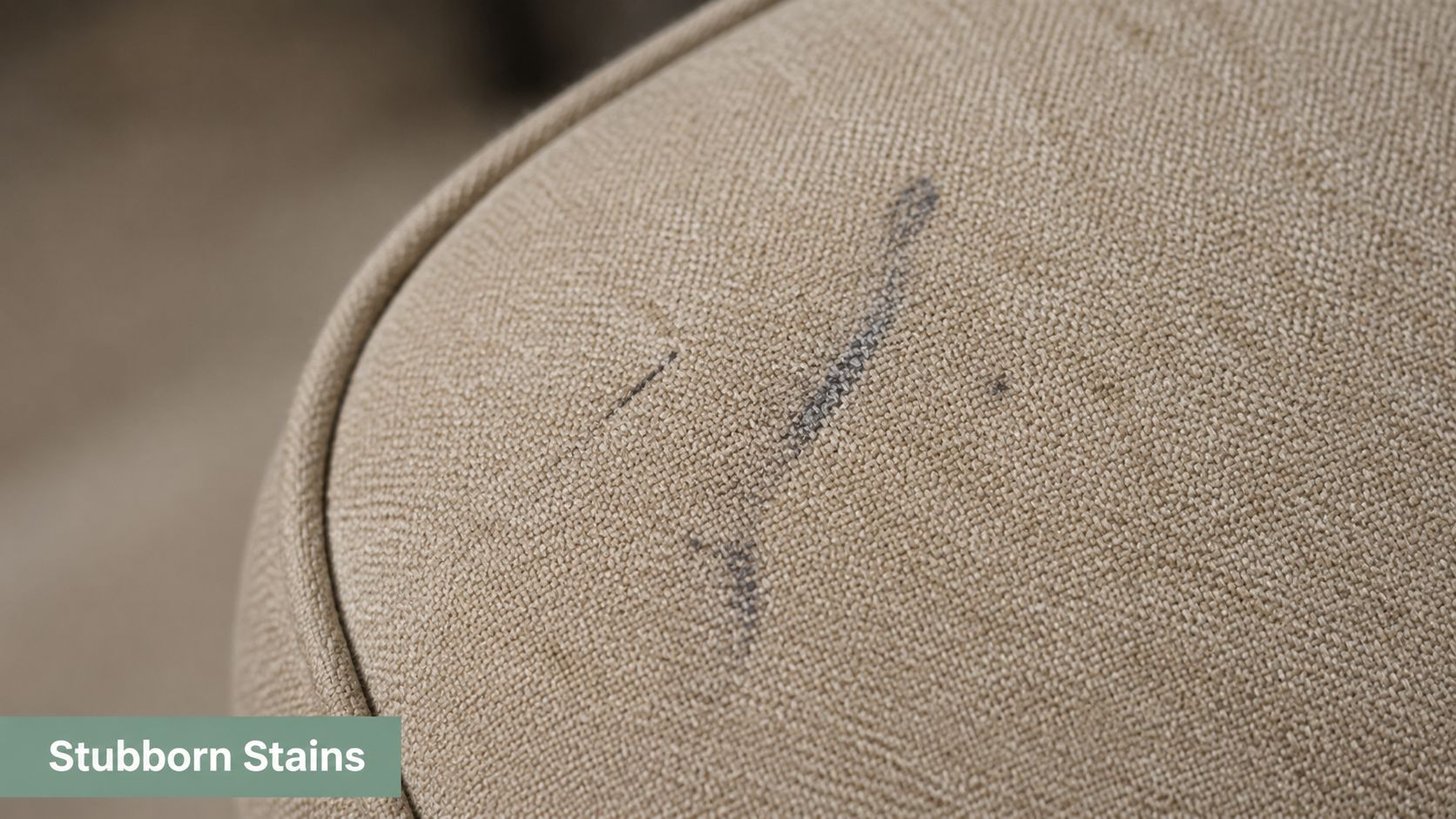
For durable fabrics that still show a shadow
A baking soda and water paste can help as a cautious follow-up on sturdy materials. Keep the texture soft, apply gently, and avoid grinding it in. This is a finesse step, not a scouring step.
If you're treating a stain that has survived an earlier attempt, don't layer multiple aggressive chemicals together. Work with one method, rinse thoroughly, then reassess.
For white bleach-safe fabrics only
Clorox outlines a specific bleach-safe protocol for whites: saturate the stain with alcohol-based hand sanitizer, let it sit for a few minutes, then pretreat in a diluted bleach solution made with 1/4 cup bleach per 1 gallon of water for 5 minutes before washing. It also warns that bleach should never be used on wool, silk, mohair, leather, or spandex, as described in Clorox's fabric-marker guide.
That's a narrow-use method, not a universal one. Use it only when the fabric and care label clearly allow it.
One more detail sensitive-skin households shouldn't ignore
After stronger spot treatments, a thorough wash matters for comfort. This is also where fragrance-free matters more than “unscented.” Unscented products may still contain masking ingredients. Fragrance-free products skip added fragrance altogether, which is usually the safer choice for eczema-prone or scent-reactive skin.
If the stain isn't marker after all, or if you're dealing with a mixed stain situation, this guide to paint remover from clothes can help you sort out the next step.
Frequently Asked Questions About Marker Removal
Can hand sanitizer remove permanent marker from clothes
Yes, it can help because alcohol-based sanitizer works as a solvent on marker ink. It's most useful on washable, durable fabrics and often works best as a blotting aid rather than a scrub-in product. Use a small amount, keep an absorbent cloth underneath, and wash the item after treatment.
What's the best first step when I find fresh marker on fabric
Blot gently and get an absorbent layer under the stain. Fresh stains are easier to lift than dried ones, so speed matters. Don't rub, and don't flood the area with random cleaners before you know the fabric type.
Are these methods safe for baby clothes
They can be, if you use a fabric-appropriate method, rinse thoroughly, and finish with a complete wash using a fragrance-free laundry product. Baby clothing sits close to warm, sensitive skin, so avoiding heavy scent and leftover treatment residue matters.
What should I do if the stain is on a couch cushion
Check whether the cover is removable and washable. If it is, do the spot treatment first, then wash according to the label. If it isn't removable, use minimal liquid, blot carefully, and avoid soaking the cushion insert.
Can old permanent marker stains still come out
Sometimes yes, especially on durable fabrics. Older stains usually need repeat treatment and realistic expectations. You may not get a perfect result, but you can often improve the appearance a lot by lifting the ink gradually instead of attacking it harshly.
How can I prevent marker stains on kids' clothes
Keep a few “art clothes” or an oversized paint shirt for crafts, choose washable markers when possible, and treat marks as soon as you notice them. Fast action is usually the difference between a manageable spot and a set-in stain.
If your household needs laundry care that stays aligned with this same low-residue, sensitive-skin approach, Lumehra offers fragrance-free, pre-measured cleaning products designed for families who want effective washing without added fragrance, dyes, optical brighteners, or PVA film. It's a practical fit for parents, babies, and anyone who wants clothes to come out clean without the extra irritants.


