 TRY LUMEHRA RISK-FREE • FREE SHIPPING OVER $49 (EXCLUDES PO BOXES) • 30-DAY MONEY-BACK GUARANTEE


How To Prevent Fabric Pilling: Your Ultimate Guide
You pull a favourite sweater out of the wash, smooth it over your hands, and there they are. Tiny fuzzballs across the chest, under the arms, or along the sides where a bag rubs. The fabric still feels soft, but it looks tired far sooner than it should.
For households dealing with sensitive skin, eczema, or fragrance intolerance, this gets even more frustrating. A rough, pilled surface can feel scratchier against the skin, and the laundry habits that wear clothes down often overlap with the habits that leave behind irritating residue. How to prevent fabric pilling isn't just about keeping clothes looking better. It's also about building a gentler routine that protects both fabric and skin.
Why Some Fabrics Pill and Others Do Not
Fabric pilling happens when loose or broken fibres on the surface of a textile tangle together into small balls. Those pills usually show up where friction is highest, such as under the arms, along side seams, on cuffs, or where a seatbelt or backpack strap rubs.
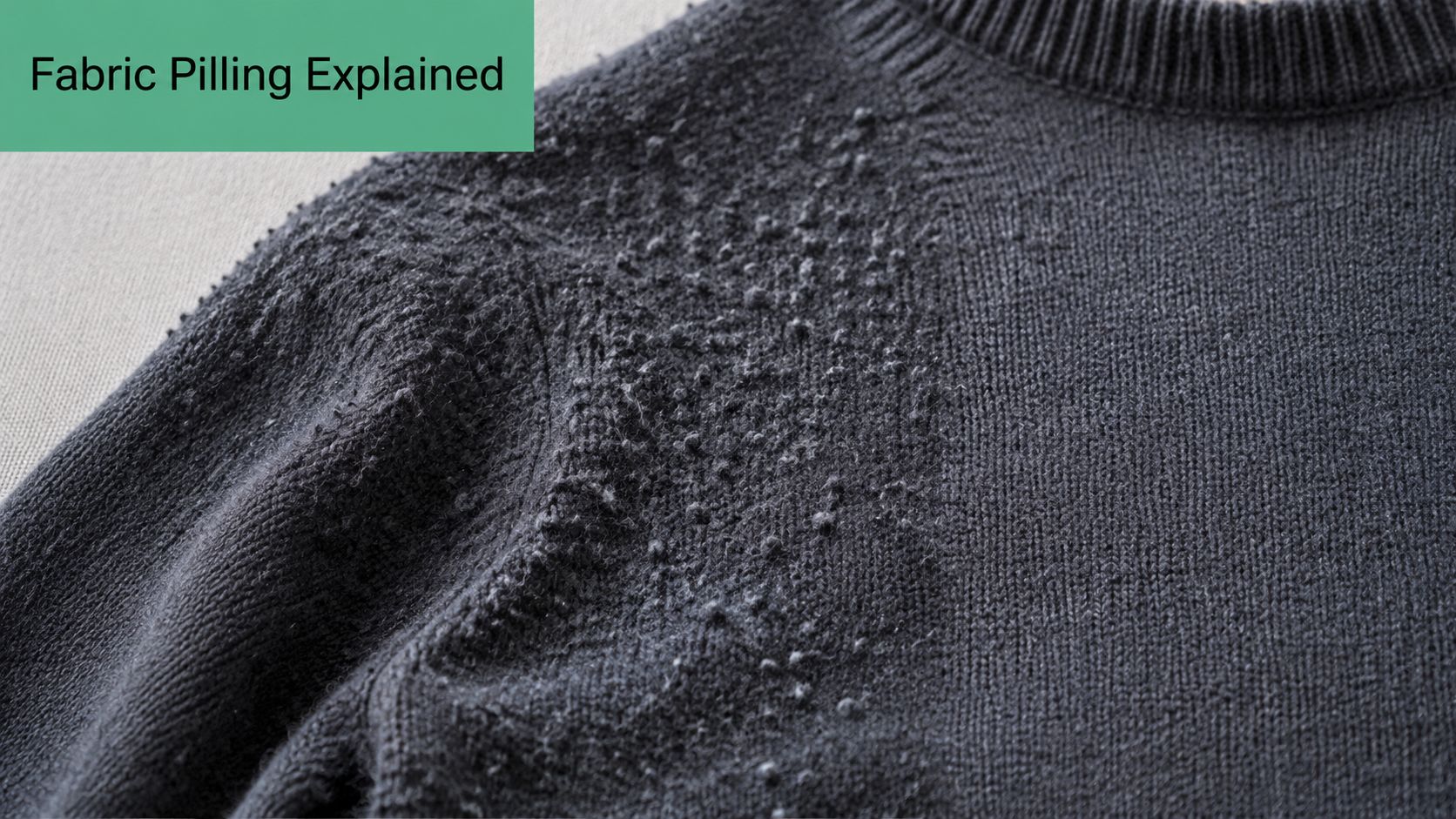
That doesn't automatically mean the garment is poor quality. Some fabrics have a structure that makes pilling more likely. Knits tend to allow more surface movement than tightly woven fabrics, so fibres have more opportunity to loosen, catch, and knot up.
The root cause is friction
The key point is simple. Pilling is mostly a friction problem. REI notes that pilling is chiefly caused by abrasion and points to pill-resistant fabrics as one way to reduce it, while also supporting practical care habits that limit rubbing during wear and washing in its guide on preventing and fixing pilling.
For many households, the biggest source of repeated friction isn't daily wear. It's laundry. Washers and dryers repeatedly rub fibres against each other, especially in mixed or overloaded loads.
Practical rule: If a fabric is already soft, brushed, fuzzy, lofty, or loosely knit, treat it as pilling-prone from day one.
Why this matters for sensitive skin
A pilled fabric surface can feel less smooth on already reactive skin. That matters for people who notice flare-ups from rough waistbands, leggings, sleepwear, or sweater collars. Gentle fabric care helps in two ways. It preserves the textile and reduces the need for harsher cleaning products, heavy softeners, and over-washing.
This is also where material choices connect to broader ingredient concerns. If you're trying to reduce synthetic shedding in the wash, it helps to understand the clothing side as well as the detergent side. Lumehra's article on how to avoid microplastics is a useful starting point for that bigger picture.
Start by Choosing Pilling-Resistant Fabrics
If you want fewer pills, start before laundry day. The easiest clothes to maintain are the ones built to resist surface fuzz in the first place.
Whirlpool advises that tightly woven, durable fabrics resist pilling better than loose, short-fibre knits, which matches what most textile care professionals see in everyday wear. Structure matters as much as fibre content.
What to look for on the rack
A quick hand-feel tells you a lot. Fabrics that feel very fuzzy, brushed, hairy, or loosely looped often have more exposed fibre ends on the surface. Those ends are more likely to catch and tangle later.
Use this simple shopping filter:
| Fabric trait | Usually better for resisting pills | Usually more prone to pilling |
|---|---|---|
| Construction | Tight weave, smooth surface | Loose knit, lofty or fuzzy surface |
| Surface feel | Crisp, compact, stable | Soft, brushed, fleecy, hairy |
| Fibre behaviour | Longer, smoother fibres | Shorter fibres that work loose more easily |
| Everyday wear | Holds shape with less rubbing | Shows wear faster in high-friction areas |
Better choices for high-use clothing
For school uniforms, baby basics, T-shirts, pillowcases, and everyday tops, smooth and stable fabrics are easier to keep presentable. If you're buying activewear, base layers, or loungewear for someone with sensitive skin, a smoother face fabric often feels better and stays neater longer.
That doesn't mean you need to avoid all knits. It means you should choose them with open eyes. A plush brushed legging may feel lovely in the fitting room, but it usually demands more careful washing, drying, and storage than a smoother knit.
Expensive garments can still pill. Price doesn't override fibre length, surface finish, or fabric construction.
Read labels, but don't stop there
Labels tell you fibre content, not the whole durability story. Two cotton tops can behave very differently if one is tightly constructed and the other is open and slouchy. The same goes for sweaters. A dense knit generally ages better than one with a very airy hand.
If you're also choosing home textiles or upholstery where surface texture matters, this explainer on refresh living spaces with jacquard gives useful context on how fabric construction changes wear, appearance, and maintenance.
Your Gentle and Skin-Safe Washing Routine
A common laundry problem in sensitive-skin homes looks small at first. A favourite sleep shirt comes out clean but feels rougher, shows fuzz at the sides, and starts bothering the skin before it looks old. In practice, the wash routine often causes that slide faster than everyday wear.
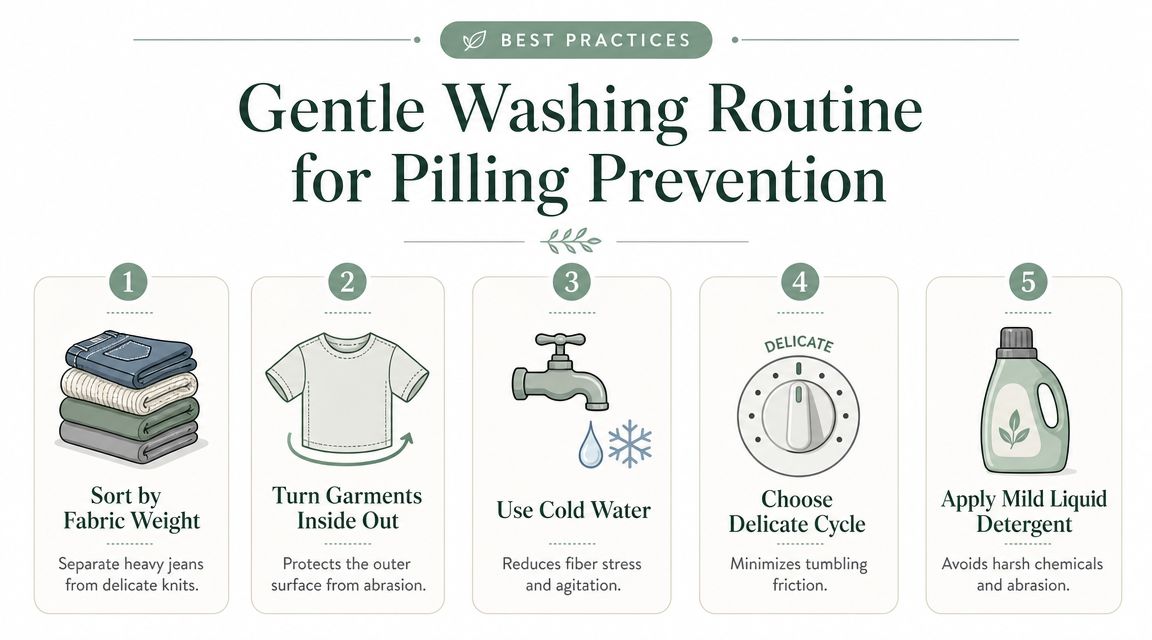
Pilling is driven by friction, so the goal in the washer is simple. Reduce rubbing, reduce residue, and avoid wash habits that make fabric feel harsher against reactive skin. That matters for anyone managing eczema, fragrance intolerance, or a general preference for lower-waste laundry with fewer plastic-based additives.
Sort by texture, weight, and hardware
Colour sorting protects dye transfer. It does very little for fabric surfaces.
The loads that pill fastest are usually mixed loads. A knit top rubbing against jeans, towels, or a sweatshirt picks up far more abrasion than it would in a softer load. Zippers, Velcro, bra hooks, and rough trims make the problem worse.
Use a sorting routine like this:
-
Wash heavy items separately
Denim, towels, hoodies, and structured garments belong in their own load. -
Keep soft knits with soft knits
T-shirts, pyjamas, leggings, fleece, and sweaters wear better together. -
Control snag points
Close zippers, fasten hooks, and bag anything with Velcro or rough hardware.
That one change usually does more than switching detergents.
Set up the load before you press start
Turn pilling-prone pieces inside out. Give them room to move. An overfilled drum creates constant fabric-on-fabric grinding, especially at cuffs, thighs, underarms, and side seams.
Arm & Hammer makes the same point in its article on pilling on clothes. Mechanical abrasion is the main driver, so prep matters. A gentle cycle cannot fully protect a load that was packed too tightly or mixed with rough items.
Keep the drum loosely filled so garments circulate instead of rubbing in one dense mass.
Choose a detergent that supports both fabric care and skin comfort
Detergent does not prevent pilling on its own. It does affect how often clothes need rewashing, how much residue stays in the fabric, and whether a garment feels comfortable against sensitive skin.
For reactive households, label language matters. Fragrance-free means no added fragrance. Unscented may still include masking ingredients. If someone gets itchy, congested, or headachy around scent, that difference is practical, not cosmetic.
I also look at what repeated washing does over time. Heavy perfumes, dyes, and optical brighteners can push families into extra rinse cycles or repeat washes when residue or scent lingers. More washing means more friction. For a simple option in this category, Lumehra laundry detergent tablets are pre-measured and PVA-free, and they're designed without synthetic fragrance, dyes, or optical brighteners.
Some items are better off with even less agitation. Wool, bras, baby clothes, and flare-prone knits often last longer if they are washed by hand or with a very controlled routine. This guide to hand-washing laundry explains how to do that without turning it into a complicated chore.
Use shorter, cooler, lower-friction wash settings
Cold water and a gentle cycle are usually the safest default for pilling-prone clothing. Shorter cycles help too. Longer wash times mean more rubbing, even when the water temperature is low.
Trade-offs matter here. Gym clothes, heavily soiled kids' items, and workwear sometimes need more cleaning power than a delicate cycle can provide. In those cases, keep the stronger setting for the very dirty load, not for everything in the hamper. That protects the clothes that sit next to the skin the longest, such as sleepwear, base layers, and soft everyday tops.
Give specialty gear its own routine
Sports equipment should not be treated like ordinary laundry. Straps, elastic panels, textured shells, and padding all create extra friction in the wash, and trapped odour often tempts people to over-wash or use heavily scented products.
If your household deals with shin pads, base layers, and padded equipment, this washing hockey gear guide shows how to clean those items without being unnecessarily rough on the materials.
For everyday clothing, the most reliable routine stays simple. Smaller loads. Similar textures. Cold water. Gentle agitation. That keeps fabric smoother, helps clothes stay comfortable on sensitive skin, and cuts down on the wear that sends garments to the rag pile too soon.
How to Dry Clothes Without Causing Damage
Drying is where many well-washed garments lose the progress you made in the washer. Heat and tumbling add another round of fibre stress, and pilling-prone fabrics often show it quickly.
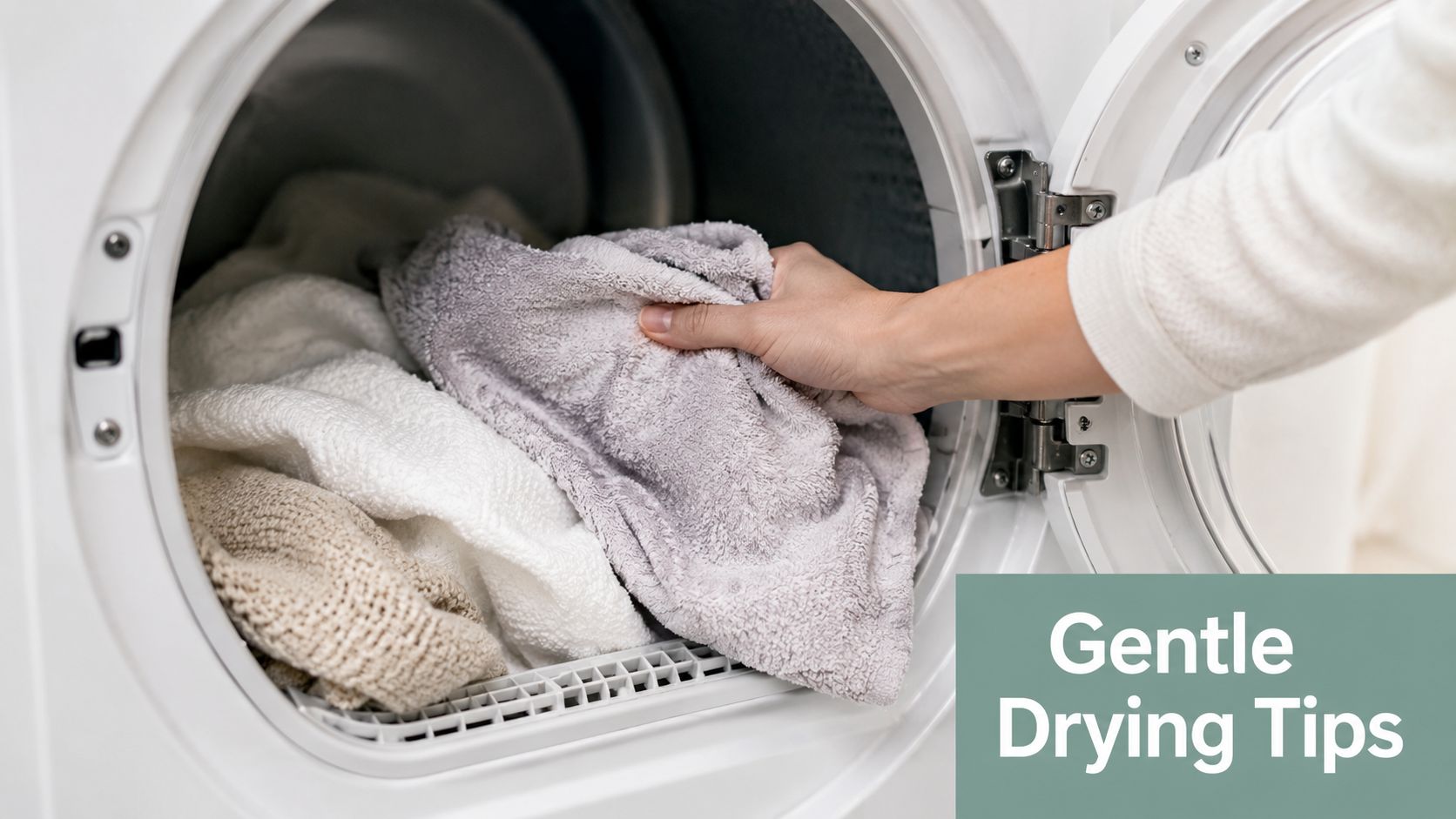
Whirlpool advises air-drying or using low heat when you want to reduce pilling. That lines up with what works in real households. Sweaters, fleece, knit sleepwear, and many activewear pieces hold up better when you keep them out of a hot dryer.
Air-drying is the safest default
If a garment pills easily, air-dry it unless the care label clearly supports machine drying and the item is sturdy enough to handle it. Lay sweaters flat so the shoulders don't stretch. Hang lighter knits only if the fabric can support its own weight without distorting.
A drying rack is often the simplest fix for chronic pilling. If you want setup ideas for knits in smaller spaces, MORALVE's guide on drying sweaters gives practical examples of how to dry them without adding drag or stretching.
Lower heat doesn't just protect appearance. It also helps preserve softness and elasticity, which matters when rough fabric can trigger skin irritation.
If you need the dryer, change the settings
Sometimes air-drying isn't realistic. In that case, use the lowest heat setting available, or an air-fluff cycle if the item only needs a finishing tumble. Remove clothes while they're still slightly damp, then let them finish drying on a rack or hanger.
That approach cuts down on overdrying, which can leave fibres brittle and rough. It also helps reduce baked-in residue from overused detergent or softener, which some people notice as stiffness or itchiness against the skin.
For households already using dryer accessories, it's worth understanding what they can and can't do. This overview of wool dryer balls is helpful if you want to reduce static and separate items gently without relying on heavily fragranced dryer sheets.
A quick visual walkthrough can help if you're trying to build a gentler drying habit into a busy routine.
Storing Clothes and Repairing Minor Pilling
Pilling doesn't stop once clothes are clean and dry. Closets, drawers, and even the way you stack garments create friction over time.
Heavy sweaters should usually be folded, not hung. Hangers pull on the shoulders, distort the knit, and create repeated rub points where the garment bears weight. Drawers matter too. If they're packed tight, clothes scrape against each other every time you pull one item out.
Storage habits that reduce wear
A few small adjustments make a visible difference:
- Fold bulky knits flat so they keep their shape and don't rub against hanger edges.
- Leave breathing room in drawers instead of compressing garments into a tight stack.
- Store rough items separately from fine knits. A zip, hook, or textured seam can abrade fabric even outside the wash.
- Rotate frequently worn pieces so the same cardigan or school jumper doesn't take all the friction every week.
How to remove pills without ruining the garment
Once pills appear, removal is cosmetic. You can improve the surface, but you can't restore the original fibre structure. That's why repair tools should be used lightly.
Here's how each tool fits:
| Tool | Best use | Main caution |
|---|---|---|
| Fabric shaver | Fast cleanup on sturdy knits and fleece | Can thin fabric if overused |
| Sweater comb | Gentle touch on some woollens | Needs a light hand |
| Pilling stone | Works on certain textured fabrics | Too abrasive for delicate knits |
| Lint roller or tape | Lifts loose fuzz, not embedded pills | Limited effect on established pilling |
Lay the garment flat. Work slowly in one area at a time. Test the tool on an inconspicuous spot first, especially with fine wool, brushed fabrics, or thin knitwear.
Remove only the pills you can see. Repeatedly shaving the same area because you want a factory-smooth finish usually shortens the life of the garment.
Your Fabric Pilling Questions Answered
Does fabric softener stop pilling
No. It may make fabric feel temporarily slicker, but it doesn't solve the main cause, which is abrasion. In some households, softener buildup also creates residue that traps odours and feels unpleasant on sensitive skin.
Can you completely fix pilling
Not completely. You can remove pills and improve the appearance of the garment, but you're trimming away broken surface fibres. The original fabric surface doesn't come back.
Why do expensive clothes still pill
Because price and pilling resistance aren't the same thing. A costly loose-knit sweater can pill faster than a more modest, tightly constructed garment. Fibre length, surface finish, and fabric construction matter more than the price tag.
Are fabric shavers safe for all clothes
No. They're safest on sturdier fabrics with enough body to tolerate light shaving. Use extra caution on thin knits, delicate woollens, and anything with an open or airy construction.
Is hand-washing always better than machine washing
Not always, but it often helps with highly delicate items because it reduces tumbling friction. The key is still gentle handling. Scrubbing, wringing, and twisting can cause their own damage.
Should you wash pilling-prone clothes less often
Often, yes. If an item isn't visibly dirty, airing it out between wears can reduce unnecessary abrasion. This works especially well for sweaters, outer layers, and lounge pieces that haven't been worn against sweaty skin.
What's the best single habit if you want to know how to prevent fabric pilling
Keep friction low at every stage. Choose smoother fabrics, sort loads by texture, avoid overloading the washer, use a gentle fragrance-free detergent, and keep pilling-prone items out of high heat whenever possible.
If you're building a laundry routine for sensitive skin and want fewer variables in every load, Lumehra offers fragrance-free, pre-measured cleaning products designed for households that want straightforward ingredient choices without dyes, optical brighteners, or PVA film.


