 TRY LUMEHRA RISK-FREE • FREE SHIPPING OVER $49 (EXCLUDES PO BOXES) • 30-DAY MONEY-BACK GUARANTEE


How to Wash Comforter: Expert Care Guide for 2026
You stand in front of the washer holding a comforter that cost real money, fills half your arms, and feels one bad cycle away from disaster. Many homeowners hesitate for good reason. A comforter can come out clean, or it can come out twisted, clumped, still soapy, and somehow less comfortable than when it went in.
For sensitive-skin households, the risk isn't only fabric damage. Bedding sits against skin for hours at a time, and whatever stays trapped in the shell or fill stays close to your face, neck, and arms all night. That matters in Canada, where approximately 10% of the population suffers from atopic dermatitis or eczema, with laundry detergents being a primary trigger for flare-ups due to synthetic fragrances and dyes, according to Maytag's comforter washing guide.
A good comforter routine protects loft, stitching, and fill. It also reduces the chance that hidden fragrance, dye, or detergent residue turns your bed into a nightly irritant. That's the difference between washing bedding and caring for it.
Why Washing a Comforter Feels So Risky
A comforter is one of the easiest household items to clean badly.
People usually fear the obvious failures first. Shrinkage. Clumping. A seam bursting mid-cycle. A down fill turning into cold patches. Those are real problems, especially when the comforter is oversized, older, or labelled with limited-care instructions.
The less visible problem is often the one that lingers longer. Residue. Thick bedding holds onto wash water, detergent, and odour more easily than a T-shirt or pillowcase. If the formula is heavily fragranced or loaded with dyes, that leftover film doesn't just affect the fabric. It can affect sleep comfort too.
What families notice first
In practice, the warning signs usually look like this:
- The comforter feels heavy after drying: Moisture may still be trapped deep in the fill.
- The fabric feels stiff or tacky: Too much detergent likely stayed behind.
- The bed smells “fresh” in a strong way: That often means fragrance is lingering, not that the comforter is cleaner.
- Skin feels itchier at night than during the day: Bedding is a common place to look, especially after wash day.
Clean bedding should feel neutral. If a comforter smells strongly of perfume after drying, that's a clue that something is still sitting in the fibres.
The goal isn't just to avoid clumps
Knowing how to wash comforter properly means thinking about three things at once. Mechanical stress, chemical residue, and drying behaviour.
A safe wash routine gives the comforter enough room to move, uses a detergent that rinses out cleanly, and finishes with patient drying on gentle heat. That combination preserves loft better than aggressive washing ever will.
Perform These Pre-Wash Checks First
Skipping the pre-wash check is how small problems become expensive ones.

Read the care label like it matters
It does. If the label says machine washable, you can move forward carefully. If it says hand wash, use a gentler manual method. If it says dry clean only, believe it. Some fills and shells do not tolerate saturation, spin speed, or extended tumbling.
Pay attention to the fill type too:
- Down and feather fills: Need more space, lighter detergent, and gentler handling.
- Synthetic fills: Usually tolerate machine washing better, but they can mat if overwashed or overdosed with detergent.
- Wool or silk fills: Often need hand washing or professional care.
If you're also caring for brushed cotton or flannel bedding layers, The Fabric Company's guide to flannels is a useful reference for understanding how softer raised fabrics react to friction, heat, and repeated laundering.
Inspect seams, corners, and stains
Run your hands along the edges and quilting lines. Look for pinholes, loose stitching, or thinning spots. A tiny opening can become a machine full of feathers or batting.
For marks, spot-treat before the full wash. Use a small amount of diluted gentle detergent and blot rather than scrub. Scrubbing pushes stains deeper and roughs up the shell fabric.
A quick pre-wash checklist helps:
- Check the corners: These areas often tear first.
- Look for oily patches: Body oils around the top third of the comforter need pre-treatment.
- Confirm baffle stitching is intact: Uneven internal stitching leads to shifting fill during the wash.
- Empty the washer area: Comforters absorb enough water that balance matters. Start with a clear drum and no competing items.
Confirm the washer is actually large enough
This is the step frequently underestimated. Industry standards specify that comforters require large-capacity washers, typically 4.5+ cubic feet, to ensure proper cleaning. When cramped into smaller drums, water circulation becomes restricted, reducing sanitization effectiveness by up to 40% and leaving behind detergent residue, as noted in Parachute's comforter washing guide.
If the comforter has to be stuffed in, the machine is too small.
Practical rule: A comforter should fit loosely enough that you can move it around the drum by hand before starting the cycle.
If it doesn't, take it to a laundromat with a large front-load machine. That's a better outcome than forcing a bad home wash.
Select a Detergent That Cleans Without Irritating
The detergent decision matters more than most care labels suggest.
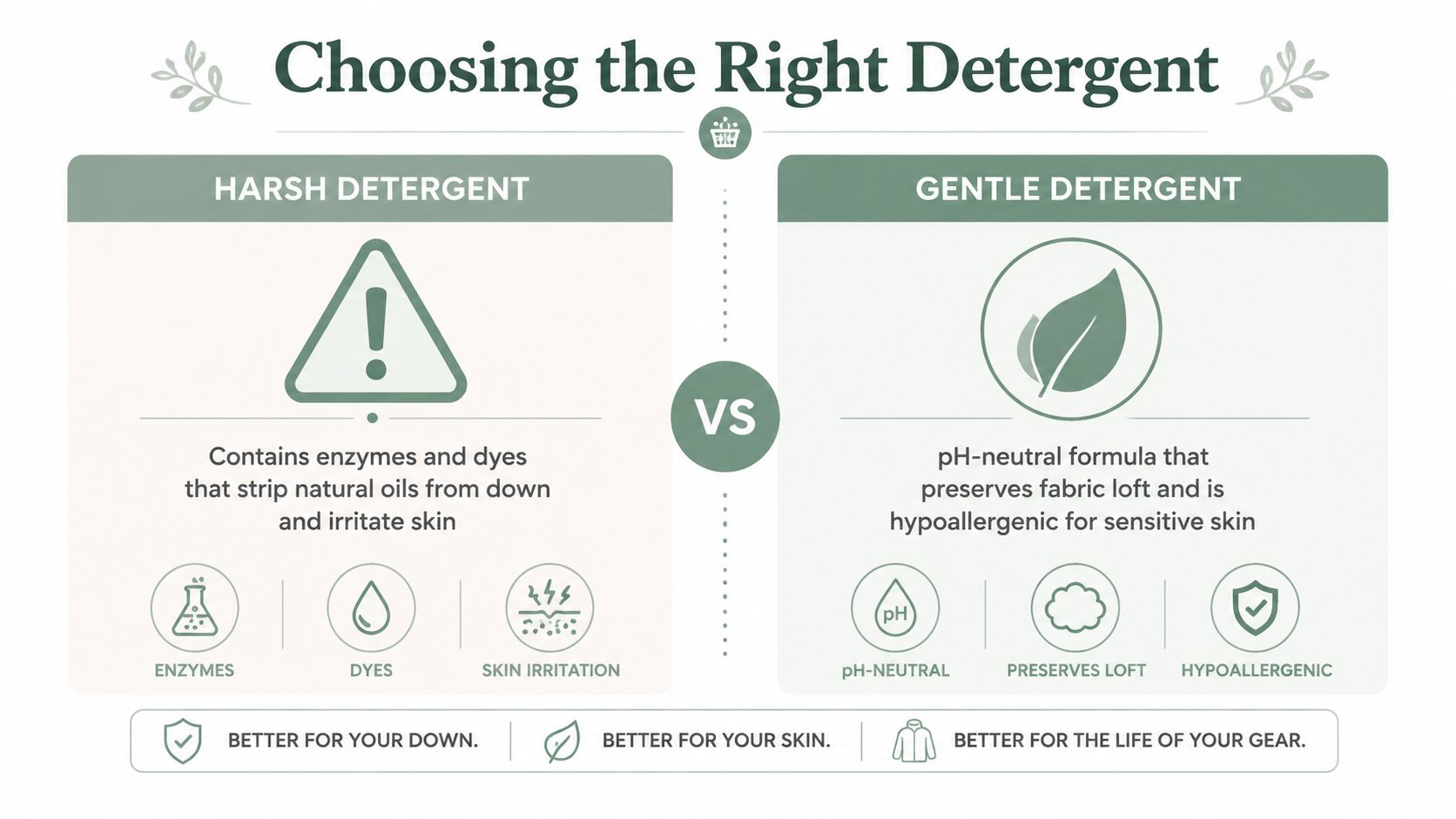
A comforter holds onto wash chemistry differently than everyday laundry. Its thickness slows rinsing. Its fill traps residue. Its shell spends long stretches in contact with skin. A product that seems “fine” on jeans can feel awful in bedding.
Fragrance-free is not the same as unscented
Unscented and fragrance-free aren't interchangeable. Unscented products can still include masking agents to neutralise odour. Fragrance-free products are the better fit when you're trying to reduce avoidable skin triggers in bedding.
For anyone dealing with eczema, fragrance sensitivity, or irritation that seems worse at bedtime, this distinction is worth taking seriously. If you want a deeper breakdown of what to look for on labels, Lumehra's guide on how to find the best laundry detergent for sensitive skin is a practical companion read.
Why liquids and pods can create problems
Liquid detergent has one obvious advantage. It dissolves quickly. But it also invites overpouring, and bulky bedding doesn't rinse out excess product easily. Pods solve measuring for some households, yet they add another variable: the film around the detergent. If you're trying to reduce unnecessary plastic-derived inputs and avoid mystery residue, that trade-off matters.
For comforters, what works best is usually simple:
- Use less detergent than your instinct says
- Choose a formula without added fragrance or dyes
- Skip fabric softener
- Avoid heavily concentrated products that leave a slick hand-feel
The “clean laundry” smell many people expect from bedding often comes from fragrance compounds that stay behind. Sensitive skin doesn't care whether that scent reads as floral, baby-fresh, or linen. It reacts to exposure.
Match the detergent to the fill
Not every comforter wants the same chemistry.
| Feature | Liquid Detergent | Detergent Pods | Lumehra Tablets |
|---|---|---|---|
| Dosing control | Easy to overpour | Pre-measured | Pre-measured |
| Residue risk in bulky bedding | Can be higher if overdosed | Can be higher if film or detergent doesn't rinse cleanly | Designed for simple, consistent dosing |
| Fragrance-free options | Available, but label-checking matters | Available, but fewer options | Available in a fragrance-free, PVA-free format |
| Sensitive-skin suitability | Depends on formula | Depends on formula and film | Strong fit for households avoiding fragrance, dyes, and PVA |
| Travel and storage | Can spill | Compact | Compact |
| Best caution point | Don't overuse | Watch for film concerns | Use as directed for the load size |
For fill-specific care, use this rule of thumb:
- Down and feather comforters: Choose a very gentle detergent. Avoid harsh enzyme-heavy formulas if the label advises delicate care.
- Synthetic fills: Can usually handle a mild plant-based detergent, but residue still matters.
- Wool and specialty natural fills: Stay with the mildest option possible, and follow the label first.
The best detergent for a comforter is the one you won't smell, feel, or keep rinsing out the next morning.
The Gentle Washing Method Step-by-Step
The wash itself should feel almost uneventful. That's a good sign.
Load it loosely and balance the weight
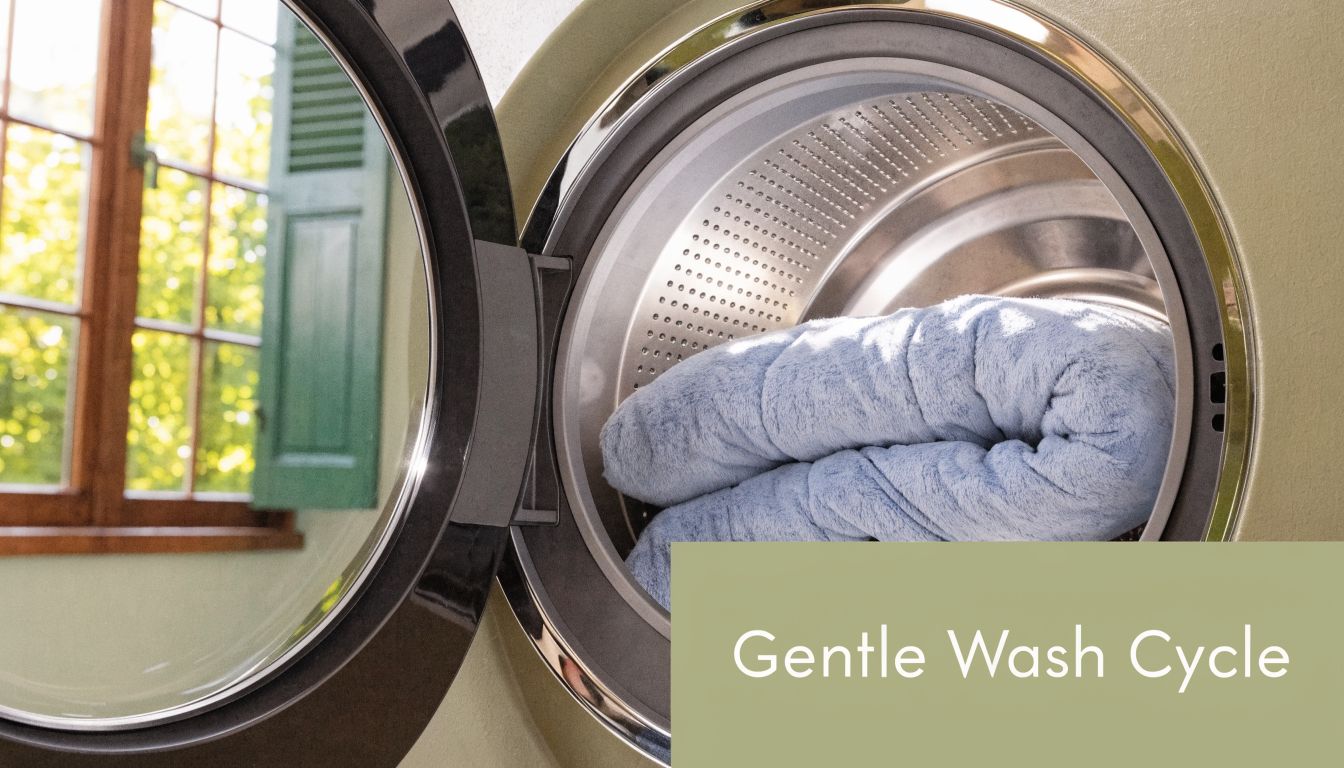
Place the comforter into the drum in a loose ring rather than shoving it into a dense ball. That shape helps water move through the fill and reduces the chance of the load thumping to one side.
Don't add towels to “help” balance it. Towels change absorbency, trap detergent, and can rough up a delicate shell. Wash the comforter on its own unless the manufacturer says otherwise.
Use cool water and the gentlest suitable cycle
Choose Bulky, Bedding, or Delicate, depending on what your machine offers and what the care label allows. Cool or cold water is usually the safer choice because it protects shell fibres, lowers the chance of shrinkage, and reduces stress on delicate fills.
The detergent should go where your machine is designed to dissolve it properly. For front-loaders, use the dispenser if the product instructions permit it. For top-loaders, let water begin circulating before adding detergent when that's appropriate for your machine type.
A few settings matter more than the rest:
- Water temperature: Cool or cold is the safer default.
- Cycle choice: Gentle enough to protect the fill, long enough to flush soil out.
- Spin speed: Moderate is usually better than aggressive.
- Extra rinse: Worth selecting, especially for sensitive skin homes.
If the care label points you away from machine washing entirely, a manual method is safer. This guide to hand-washing laundry is useful when you're dealing with delicate fills or uncertain fabric behaviour.
The extra rinse is not optional for sensitive bedding
Comforters trap detergent in a way flat linens don't. One rinse may leave the shell looking fine while the interior still holds soap.
Bedding that sits against skin all night should rinse cleaner than everyday clothing.
If your machine allows an extra rinse, use it. If the comforter still feels slippery or unusually heavy after the cycle, run another rinse before drying.
How to Dry a Comforter for Fluffy Results
Drying decides whether your comforter feels cloud-like or disappointing.

Use low heat and give it room
High heat is fast, but it's hard on shells and fills. Low heat takes longer and gives you a much better chance of preserving loft. A comforter needs room to tumble, not bake.
Wool dryer balls help by separating layers and knocking apart wet clumps as the comforter turns. If you want a good example of the kind many textile-focused households prefer, these pure wool balls for hobby quilters show the basic construction to look for. Keep the material simple and skip anything scented.
For a fuller explanation of how dryer balls support airflow and loft, Lumehra also has a helpful primer on wool dryer balls.
Stop and redistribute the fill
This is the part impatient people skip, and it shows in the final result.
Pause the dryer periodically, pull the comforter out, shake it, and feel the thickest sections with both hands. Break apart any damp clusters before they harden into lumps. Pay special attention to corners and stitched channels, where wet fill tends to collect.
A reliable drying routine looks like this:
- Start on low heat: Keep the first stretch gentle.
- Check the centre panels by hand: The outside dries first.
- Redistribute clumps immediately: They're easier to fix while still damp.
- Keep going until it feels fully dry throughout: Not almost dry. Fully dry.
Here's a visual walkthrough if you want to compare technique and dryer handling before you start:
How to tell it's actually done
A dry comforter feels light, springy, and evenly warm to the touch. A damp one often feels cooler in the middle sections and denser near seams. If you put it back on the bed too early, trapped moisture can turn into a stale smell later.
If you can't machine dry it safely, lay it flat in a well-ventilated area and turn it regularly. Air-drying takes longer, but patience is cheaper than mildew.
Answers to Common Comforter Washing Questions
Can I wash a comforter at home if it barely fits?
No. If it barely fits, it doesn't fit well enough.
A 2024 survey by Natural Resources Canada found that laundromat usage for bulky items like king-size comforters rose 15% post-2020 in Ontario, as 55% of standard home washers are unable to handle them without risking damage or improper cleaning, according to Mulberrys' article on washing frequency. Use a large front-load machine and bring your own fragrance-free detergent rather than relying on whatever is sold on-site.
How do I spot-clean a stain without washing the whole comforter?
Use a small amount of diluted gentle detergent on a soft cloth. Blot from the outside of the stain inward. Don't scrub, and don't soak the entire area more than necessary.
For oilier marks near the top edge, work slowly and repeat light blotting instead of trying to force the stain out in one pass. Then let the area dry fully before covering the bed again.
How often should I wash my comforter?
It depends on use, not habit.
If you use a duvet cover and wash that regularly, the comforter itself usually needs less frequent full washing. If you sleep without a cover, sweat more at night, share the bed with pets, or manage allergies or eczema, you'll likely want a stricter routine. The right frequency is the one that keeps the bedding fresh without overhandling the fill.
What if the comforter still smells strongly after washing?
A strong scent after washing often points to leftover detergent or fragrance, not better cleaning. Rewash or rerinse with a lighter hand on detergent. Avoid trying to mask the smell with scent boosters or fabric sprays, especially for sensitive-skin households.
Should I use fabric softener?
No. Fabric softener coats fibres and fills. That coating can reduce loft, make some fills clump, and leave behind ingredients that stay close to skin.
Can I hand-wash a comforter?
Sometimes, yes. Hand-washing works best for smaller or delicate comforters when the care label allows it. The challenge isn't the washing. It's removing water afterwards without twisting or damaging the shell. If the comforter becomes too heavy to lift safely when wet, machine washing in a large-capacity machine is often the better route.
What's the biggest mistake people make?
Using too much detergent in a too-small washer.
That combination causes poor circulation, incomplete rinsing, slow drying, and a comforter that looks clean on the outside but performs badly where it matters most.
If you're building a fragrance-free laundry routine that's easier on skin and simpler to manage, explore Lumehra for PVA-free, pre-measured cleaning products designed for sensitive households that want fewer irritants and more ingredient clarity.


