 TRY LUMEHRA RISK-FREE • FREE SHIPPING OVER $49 (EXCLUDES PO BOXES) • 30-DAY MONEY-BACK GUARANTEE


The Authoritative Guide to Non-Toxic Clothes Detergent for Sensitive Skin
When you search for a "non toxic clothes detergent," you're looking for more than just a clean scent or a bright white wash. For health-conscious families, especially those managing sensitive skin, eczema, or allergies, it’s a non-negotiable step toward a safer home. A truly non-toxic formula is defined by what it leaves out: fragrance, harsh chemicals, potential endocrine disruptors, and microplastics. It’s about achieving an effective clean without compromising your family’s well-being.
What Does Non-Toxic Laundry Detergent Actually Mean?
The term "non-toxic" is often used loosely in marketing, but for families in Canada and across North America dealing with dermatitis or fragrance intolerance, it has a precise meaning. It signifies a commitment to ingredient integrity and transparency, ensuring the product you use on your clothes is genuinely safe for direct skin contact.
A non-toxic detergent is formulated to exclude harmful chemicals that can cling to fabrics, irritate the skin, and pollute our waterways. It's not just about being "natural"; it's about being scientifically sound and evidence-based in its formulation.
The Shift Toward Safer Ingredients
The demand for safer laundry solutions is growing rapidly. North America now accounts for approximately 45% of the global demand for non-toxic and organic laundry products. Projections indicate that the organic segment alone could capture 25% of the entire laundry market by 2027.
This trend highlights a major shift in consumer awareness. Families are no longer satisfied with vague claims like "eco-friendly" or "gentle." They are reading labels, educating themselves on ingredient safety, and demanding full transparency from the brands they support.
A detergent’s safety isn’t determined by marketing claims but by its ingredient list. A truly non-toxic product is built on transparency and an evidence-based approach to formulation, ensuring it cleans effectively without compromising your family’s well-being.
Defining the Gold Standard for Safety
So, what should you look for? The best non-toxic detergents adhere to clear, uncompromising principles. This focus on ingredient safety is equally important for other household cleaners, like non-toxic disinfectant wipes.
Here’s what sets a genuinely safe detergent apart:
- Fragrance-Free Formulation: The product must be completely free of synthetic perfumes and masking agents. This is the single most important factor for preventing skin irritation and allergic reactions.
- PVA-Free: The formula should not be encased in polyvinyl alcohol (PVA) film, a common feature of pods and sheets that contributes to microplastic pollution.
- Complete Ingredient Transparency: Brands must list every single ingredient on their packaging. This allows you to know exactly what is touching your family’s skin.
- Free from Harsh Chemicals: The formula must exclude known skin irritants and potential endocrine disruptors, such as certain sulfates, optical brighteners, and formaldehyde-releasing preservatives.
Focusing on these standards helps you cut through marketing noise and choose a product that genuinely supports a healthier home environment.
The Hidden Irritants in Conventional Laundry Detergents
When you choose a laundry detergent, you trust it to clean your clothes, not leave behind a residue of irritating chemicals. Unfortunately, many conventional detergents—even those marketed for babies—are formulated with ingredients that can trigger skin reactions, respiratory issues, and other health concerns.
These chemical residues remain on fabrics and stay in direct contact with your skin all day. For anyone with eczema or atopic dermatitis, whose skin barrier is already compromised, this constant exposure can lead to persistent flare-ups. Knowing what to avoid is the first step toward finding a laundry solution that is truly safe.
Unscented vs. Fragrance-Free: A Critical Distinction
One of the most common points of confusion in the laundry aisle is the difference between "unscented" and "fragrance-free." While they may sound similar, their impact on sensitive skin is vastly different.
-
Unscented: This term typically means the product contains masking agents. These are undisclosed fragrance chemicals used to neutralize or cover the chemical odor of the other ingredients. For individuals with fragrance sensitivities, these can be just as irritating as a scented product.
-
Fragrance-Free: This is the gold standard for sensitive skin. It means the product contains no added fragrances or masking agents whatsoever. The formula is pure and transparent, minimizing the risk of irritation.
For anyone managing asthma, allergies, or fragrance intolerance, choosing a truly fragrance-free option is essential. Learn more about why fragrance-free laundry detergent is better for sensitive skin in our detailed guide.
Your Red Flag Ingredient Checklist
You don't need a degree in chemistry to spot problematic ingredients. Here are the top "red flag" chemicals to watch out for on detergent labels.
1. Fragrance/Parfum This single term can hide a proprietary mixture of hundreds of chemicals, including phthalates, which are known endocrine disruptors. "Fragrance" is a leading cause of contact dermatitis and respiratory irritation.
2. Optical Brighteners These are chemical additives that make fabrics appear brighter by coating them in particles that absorb UV light. They do not make clothes cleaner. These residues are left on your clothes, can cause skin photosensitivity, and do not biodegrade, leading to water pollution.
3. Sodium Lauryl Sulfate (SLS) and Sodium Laureth Sulfate (SLES) These are harsh surfactants used to create suds. SLS is a well-documented skin irritant that can strip the skin’s natural moisture barrier, worsening conditions like eczema. SLES can be contaminated with 1,4-dioxane, a probable human carcinogen.
4. Formaldehyde-Releasing Preservatives To extend shelf life, some detergents use preservatives like DMDM hydantoin or quaternium-15, which slowly release formaldehyde. Formaldehyde is a known carcinogen and a potent allergen that can trigger severe skin reactions.
Key Takeaway: A detergent is only as safe as its worst ingredient. By avoiding this "red flag" list, you can finally take control of your laundry routine and protect your family's skin and the environment.
Why PVA Film in Laundry Pods Is a Growing Concern
Laundry pods and sheets have become popular for their convenience—they are pre-measured, mess-free, and easy to use. However, this convenience often comes at a hidden environmental and health cost: polyvinyl alcohol, or PVA. This is the synthetic plastic film used to encase the detergent.
Marketed as "dissolvable," PVA film breaks down into smaller fragments in the wash, but it doesn't simply vanish. PVA is a petroleum-based polymer, and studies suggest it may not fully biodegrade in many real-world wastewater treatment conditions.
The Problem with "Dissolving" Plastic
Wastewater treatment plants, including those across Canada and the United States, are not specifically designed to filter out synthetic polymers like PVA. Research indicates that a significant portion of PVA can pass through treatment facilities, entering our rivers, lakes, and oceans as tiny plastic particles.
These fragments are a source of microplastic pollution. Once in the environment, they can absorb other toxic pollutants and be ingested by aquatic life, eventually making their way up the food chain. Using a non toxic clothes detergent should mean reducing pollution, not contributing to it.
A detergent's journey doesn't end in your washing machine. The ingredients and materials you use are sent down the drain, and if they don’t fully biodegrade, they contribute to a growing pollution problem that ultimately impacts environmental and human health.
Microplastics and Your Health
The concern isn't just environmental. Microplastics have become ubiquitous, found in everything from our drinking water to our food. While research on the direct long-term health effects is ongoing, the presence of synthetic materials where they don’t belong is a significant red flag for any health-conscious family.
Choosing a detergent that avoids PVA film is a proactive step toward reducing your household's microplastic footprint. For anyone committed to a truly non-toxic and sensitive-skin-safe lifestyle, avoiding plastic films is as crucial as avoiding harmful chemicals. Learn more by exploring why a PVA-free laundry detergent is a critical choice for your home and the planet.
The Rise of PVA-Free Alternatives
Consumer awareness of the PVA issue is driving a significant market shift. Concentrated formats like pods and sheets now make up 28% of laundry volume in North America and up to 32% in the United States. While they have reduced packaging waste by 60% compared to liquid jugs, the PVA film itself remains a major concern. This is fueling demand for genuinely microplastic-free options, with the PVA-free segment poised for major growth as families become more informed. You can explore more about this market shift and its implications in this detailed industry report on detergents.
This demand has spurred innovation toward solutions that offer both convenience and ingredient integrity.
Practical, PVA-free alternatives include:
- Powders: A classic format that is entirely free of plastic films and often comes in recyclable packaging.
- Pre-measured Tablets: Lumehra’s laundry detergent tablets offer the same no-mess, pre-dosed convenience of pods but are created by compressing a concentrated powder. They contain no PVA film, dissolving quickly and completely to leave zero synthetic residue behind.
By opting for a PVA-free format like tablets, you get the simple, effective clean you need without compromising your commitment to a non-toxic home and a healthier planet.
Comparing Non-Toxic Detergent Formats for Your Family
Choosing the right non-toxic laundry detergent isn't just about ingredients—the format matters, too. Powders, liquids, sheets, and tablets each come with their own set of trade-offs, from how easy they are to use to how much waste they create.
If you're a busy parent or managing sensitive skin in your household, you need a solution that’s simple, effective, and truly aligns with your family’s health. Let's break down the most common formats to find your perfect match.
Liquids and Powders: The Traditional Choices
Liquid and powder detergents have been laundry room staples for decades. They are powerful cleaners and easy to find, but they aren't always the best choice.
- Liquid Detergents: These are great for pre-treating stains and work well in cold water. The downside? They’re heavy, come in bulky plastic jugs, and it’s very easy to pour too much. Over-pouring wastes money and can leave irritating residue on your clothes.
- Powder Detergents: Powders are often more cost-effective and come in recyclable cardboard boxes. They do a fantastic job on tough dirt and mud. However, they can be messy to scoop and sometimes don't dissolve completely in cold water, leaving a gritty film on dark fabrics.
Sheets and Pods: The Convenient Contenders
Laundry sheets and pods became popular because they’re pre-measured and mess-free. Their lightweight design makes them easy to store and perfect for small spaces or travel.
The major drawback, however, is that most laundry sheets and pods are made with a PVA film. This dissolvable plastic is a growing concern for anyone worried about microplastic pollution. This simple visual shows exactly how those convenient pods can add microplastics to our waterways.
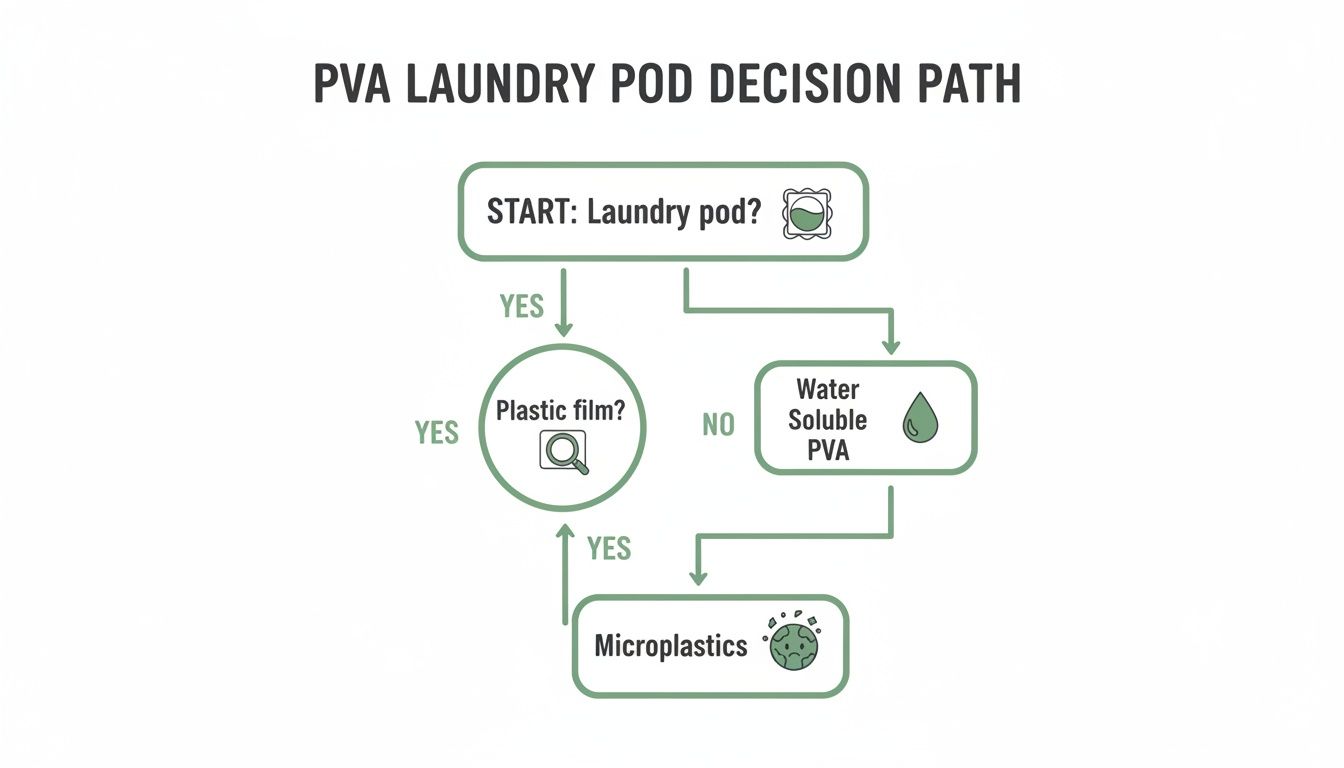
As the flowchart shows, whether the film is traditional plastic or water-soluble PVA, the end result can be the same: microplastic pollution in our environment.
Tablets: The PVA-Free Alternative
Solid detergent tablets offer a smart solution that gives you the best of every format. They have the same pre-dosed convenience as pods but without any of the plastic film.
Lumehra laundry tablets, for example, are made by compressing a concentrated powder. This means they are completely PVA-free and dissolve quickly and cleanly. They won't leave behind synthetic residue or contribute to microplastic pollution.
This format delivers a perfect, mess-free dose every time, preventing waste and ensuring a powerful clean that’s safe for sensitive skin. You can explore a deeper comparison of laundry tablets vs. pods vs. sheets to see which is truly safe in our detailed guide.
Non-Toxic Laundry Detergent Format Comparison
This table provides a clear comparison of each format, helping you decide which one best fits your family's needs for convenience, health, and environmental responsibility.
| Detergent Format | Convenience & Dosing | Environmental Impact (PVA/Microplastics) | Packaging Waste | Best For |
|---|---|---|---|---|
| Liquids | Prone to over-pouring; messy and heavy. | None from the detergent, but jug creates significant plastic waste. | High (large, often non-recyclable plastic jugs). | Pre-treating tough stains and reliable cold water washing. |
| Powders | Can be messy to scoop; dosing can be inaccurate. | None. A microplastic-free format. | Low (typically recyclable cardboard boxes). | Cost-conscious households prioritizing plastic-free packaging. |
| Pods/Sheets | Excellent. Pre-measured, lightweight, and mess-free. | High risk due to PVA film that contributes to microplastic pollution. | Varies. Often flexible plastic bags or cardboard. | Maximum convenience but with significant environmental trade-offs. |
| PVA-Free Tablets | Excellent. Pre-measured, mess-free, lightweight, and compact. | None. Completely free from PVA film and microplastics. | Low (minimal, recyclable cardboard packaging). | Health-conscious families seeking convenience without compromise. |
The ideal non-toxic laundry detergent shouldn't force you to choose between convenience and safety. Modern formats like PVA-free tablets prove you can have a simple, effective laundry routine with complete peace of mind.
Building Your Eczema-Safe Laundry Routine
For families managing eczema or sensitive skin, the right detergent is only the first step. A truly skin-safe laundry system means looking at the entire process.
Every choice, from water temperature to how you treat stains, affects your family’s skin. The goal is to remove every potential trigger, leaving fabrics pure, gentle, and free from irritation. This protects the skin's delicate barrier and dramatically reduces the risk of flare-ups caused by laundry residue.
The Foundation: Water Temperature and Proper Dosing
Two of the easiest changes you can make involve your water temperature and how much detergent you use. Both directly impact how clean your clothes get and whether irritating residue is left behind.
Warm water is usually the best choice for a non-toxic clothes detergent. It’s powerful enough to dissolve powders or tablets and wash away oils, but it won't set stains or damage most fabrics.
Cold water is great for saving energy, but it can struggle to fully dissolve powdered detergents. This can leave a gritty, irritating film on clothes.
Proper Dosing is Non-Negotiable: Using too much detergent is a leading cause of skin irritation. The excess soap doesn't rinse out, and the residue left on fabrics can trigger eczema and dermatitis. Always follow the package instructions.
Pre-measured formats like Lumehra's PVA-free tablets solve this problem. One tablet provides the perfect dose for a standard load, so you get a deep clean without residue. This is especially important for bedding, baby clothes, and anything with direct skin contact.
Gentle Yet Effective Stain Removal
Stains are a part of life, but treating them doesn't require harsh chemicals. Many conventional stain removers are loaded with enzymes, solvents, and fragrances that can easily irritate the skin.
Simple, skin-safe alternatives work just as well.
Here are a few gentle stain-fighting tips:
- Protein Stains (milk, spit-up): Soak immediately in cool water. A paste of baking soda and water can lift the stain before washing.
- Oily Stains (lotion, grease): Sprinkle baking soda or cornstarch on the spot to absorb the oil. Let it sit for an hour, brush it off, and wash.
- Colourful Stains (berries, juice): Mix equal parts white vinegar and water. Apply it to the spot for a few minutes, blot, and then launder.
These methods work with your non-toxic detergent to handle messes without adding another layer of irritants.
Caring for Baby Clothes and Activewear
Baby clothes and activewear both need special attention to keep them gentle but effective.
With baby laundry, absolute gentleness is the top priority. A baby's skin is thin and absorbs chemicals easily. Beyond the laundry room, every product that touches their skin should be safe, like a gentle baby wash for bath time.
Activewear is different. It traps sweat and bacteria, which causes odour and skin problems. Never use fabric softener, which clogs the technical fibres. Instead, add a half-cup of white vinegar to the rinse cycle to neutralize odours and break down buildup naturally.
FAQ: Your Questions on Non-Toxic Detergent Answered
Switching to a non-toxic laundry detergent is a big step, and it's normal to have questions about effectiveness, cost, and safety. You want to be confident you're making the right choice for your family's health and the environment. Here are answers to the most common questions from parents and health-conscious consumers.
Is non-toxic detergent strong enough to remove tough stains?
Yes. The belief that harsh chemicals are required for a deep clean is a marketing myth. A detergent's cleaning power comes from its surfactants—molecules that lift dirt and oil from fabric. High-quality non-toxic detergents use effective plant- and mineral-based surfactants that are tough on grime but gentle on skin. For stubborn stains, pre-treating with a paste of baking soda and water or using an oxygen-based brightener alongside your detergent is a powerful and safe strategy.
Do I need a special "baby detergent" for my infant's clothes?
No, and this is a key benefit of using a truly non-toxic detergent. If a detergent is genuinely free from fragrance, dyes, optical brighteners, and other harsh chemicals, it is safe for every member of your family, including infants. The existence of a separate "baby detergent" category often implies that mainstream formulas are not safe enough for sensitive skin. Using a single, high-quality, fragrance-free detergent simplifies your laundry routine and ensures a safe home environment for everyone.
Will non-toxic detergents work in my high-efficiency (HE) machine?
Absolutely. Most modern non-toxic detergents are formulated for both standard and high-efficiency (HE) washing machines. Because HE machines use significantly less water, they require low-sudsing formulas that rinse away cleanly. Plant-based surfactants naturally produce fewer suds than harsh chemicals like SLS, making them ideal for HE washers. Always look for the "HE" symbol on the packaging. Pre-measured, PVA-free tablets are particularly well-suited for HE machines as they provide a concentrated, low-suds dose that prevents residue buildup.
Are non-toxic detergents more expensive?
While some niche brands carry a premium price, many non-toxic options are highly cost-effective, especially when you consider the cost per load. Concentrated formulas mean you use less product per wash, so a single package lasts longer. Furthermore, formats like tablets prevent over-pouring, a common issue with liquids that wastes both money and product. A truly gentle, pH-balanced formula also leaves clothes soft, eliminating the need for separate fabric softeners and further reducing costs.
Are "biodegradable" and "non-toxic" the same thing?
Not necessarily. While the terms often overlap, they refer to different properties:
- Biodegradable: This means the ingredients can be broken down by natural processes, preventing accumulation in the environment.
- Non-Toxic: This refers to the product's impact on human health—specifically, that it is free from ingredients known to cause skin irritation, allergies, or other adverse health effects. Ideally, you want a detergent that is both. However, some biodegradable ingredients, such as essential oils or plant-derived fragrances, can still be potent allergens. For sensitive skin, always prioritize formulas that are explicitly fragrance-free.
How do I know if a brand is truly non-toxic and trustworthy?
In a market filled with "greenwashing," verifying a brand's claims is essential. A trustworthy brand demonstrates its integrity through transparency.
- Discloses All Ingredients: They provide a complete ingredient list on the label, not just vague terms like "plant-based surfactants."
- Is Explicitly Fragrance-Free: The label clearly states "fragrance-free," not "unscented," which can contain masking chemicals.
- Avoids Problematic Materials: They are transparent about avoiding harmful materials like PVA film in their product design.
- Has Third-Party Certifications: Seals from reputable organizations (e.g., EWG Verified, MADE SAFE) confirm that a product meets strict health and safety standards. By looking for these markers of transparency, you can confidently choose a detergent that aligns with your family’s health values.
Ready to make laundry day simpler, safer, and completely non-toxic? Lumehra offers pre-measured, PVA-free detergent tablets that are fragrance-free and formulated for the most sensitive skin. Experience a powerful clean without compromise. Discover the difference at https://lumehra.com.


