 TRY LUMEHRA RISK-FREE • $7.99 FLAT RATE SHIPPING UNDER $49 • FREE SHIPPING OVER $49 • 30-DAY MONEY-BACK GUARANTEE


Vinegar in Dishwasher: A Guide for Sensitive Homes
The internet loves a simple cleaning hack. Pour vinegar in the dishwasher, run a cycle, and call it a natural fix for hard water, odours, and cloudy glasses.
That advice is only half true.
Vinegar in dishwasher cleaning can help in specific situations, especially in hard water homes. But the same acidity that loosens limescale can also stress the parts that keep a modern dishwasher watertight. For families managing eczema, fragrance sensitivity, or concerns about residue on dishes, that trade-off matters more than most quick tips admit.
Many homes already deal with appliance stress from mineral-heavy water and heating systems, which is why broader maintenance habits matter too. If your household is also thinking about hot water efficiency, this practical guide to Sydney continuous flow installation advice gives useful context on how water systems affect everyday performance.
If your goal is a lower-irritant kitchen routine, it also helps to look beyond one-off hacks and understand how ingredients affect sensitive households. This guide on cleaning products for chemical sensitivity is a good place to start.
The Truth About the Vinegar Dishwasher Hack
Vinegar became popular because it feels simple, cheap, and familiar. Parents share it in group chats. Cleaning forums frame it as a safer swap for harsher products. And in some homes, it does remove the chalky film that hard water leaves behind.
But popular doesn't mean universally safe.
Modern dishwashers rely on seals, hoses, coatings, and dispensers that weren't designed for repeated exposure to acid. That doesn't mean one careful maintenance cycle will ruin your machine. It means the usual advice, especially tips that suggest adding vinegar often or pouring it directly into compartments, skips the mechanical downside.
Practical rule: Treat vinegar as occasional maintenance, not as an everyday rinse aid or detergent substitute.
The other issue is more personal. A dishwasher isn't just a machine. It's part of how your family cleans cups, plates, bottles, and baby dishes. If someone in your home has sensitive skin, dermatitis, or fragrance intolerance, “natural” isn't enough on its own. What matters is whether a method cleans well, rinses cleanly, and doesn't create a new source of irritation.
That's where the vinegar in dishwasher debate gets more nuanced. Used carefully, vinegar can help with mineral deposits and stale smells. Used too often, in the wrong place, or alongside the wrong products, it can become one more thing to manage.
What Vinegar Actually Does in a Dishwasher
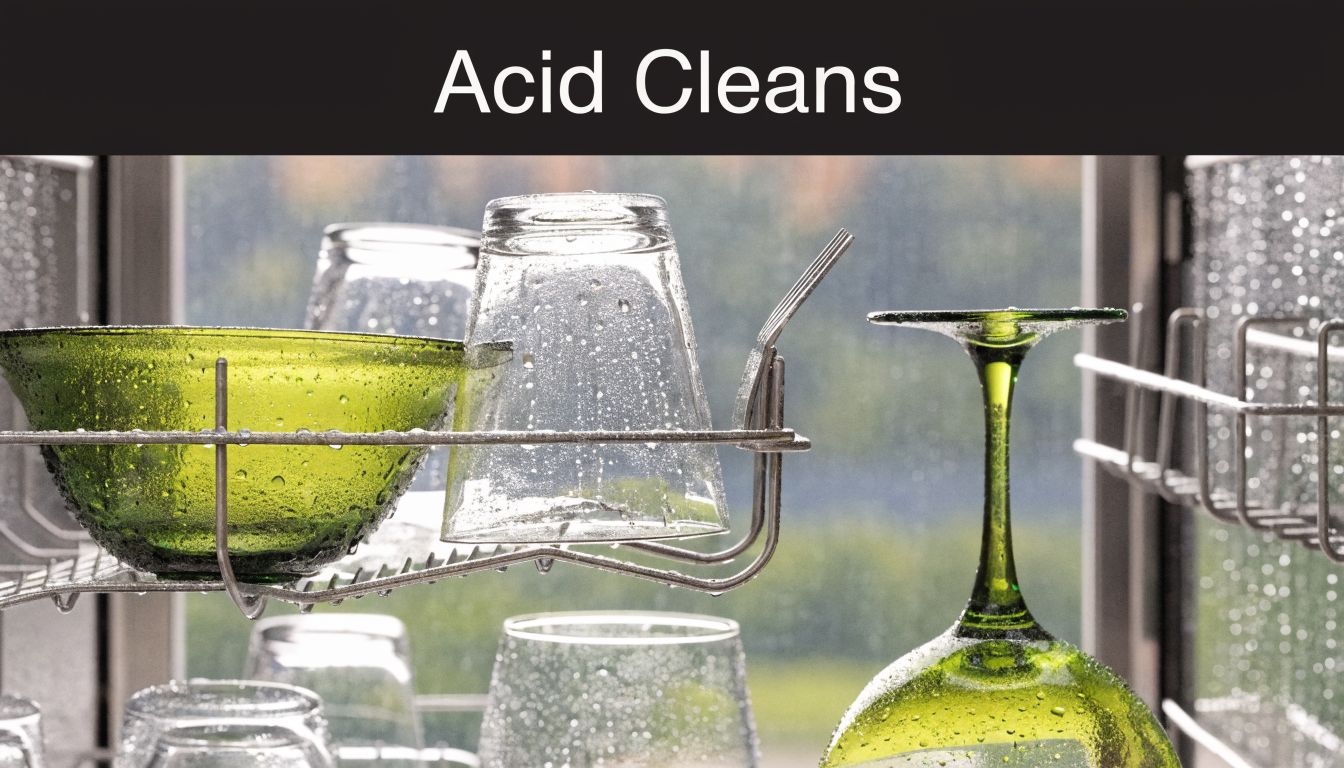
Vinegar works because it's acidic. Standard white vinegar typically contains 5% acetic acid, which reacts with mineral scale from hard water. That matters in Canada, where hard water affects approximately 60% of households, and limescale buildup can reduce dishwasher efficiency by up to 40%, according to the data cited in this overview of vinegar use in dishwashers. The same source notes that 28% of dishwasher owners in hard water regions use white vinegar, and they reported a 65% reduction in visible water spots on glassware after consistent monthly use.
Why it helps with hard water film
If you've ever descaled a kettle, you've seen the same basic problem. Hard water leaves behind mineral deposits. Inside a dishwasher, those deposits can coat spray arms, cling to the interior, and leave cloudy spots on glasses.
Vinegar helps by loosening that mineral layer so the dishwasher can flush it away more easily. In practice, people usually notice this in three places:
- Glassware: clear tumblers look less cloudy
- Spray arms: mineral deposits are less likely to block small openings
- Interior surfaces: chalky residue lifts more easily from stainless steel walls
That doesn't make vinegar a full dishwasher detergent. It doesn't replace the surfactants, enzymes, or builders used to remove grease and food soils.
Why it can reduce odours
A dishwasher can smell stale even when it looks clean. Food residue, moisture, and biofilm often collect around the filter, drain area, and door seal. Vinegar can help cut that odour because acid shifts the environment that lets that buildup linger.
Vinegar is best understood as a descaler and deodoriser. It's not a complete wash system.
This is why the hack survives. It solves a visible problem people recognise: spots, haze, and that damp smell that appears when a machine needs maintenance.
The Hidden Risks of Using Vinegar in Your Dishwasher
The strongest argument against frequent vinegar use isn't that it never works. It's that the same acid that removes scale can also wear down the soft parts inside the appliance.
Rubber seals are the weak point
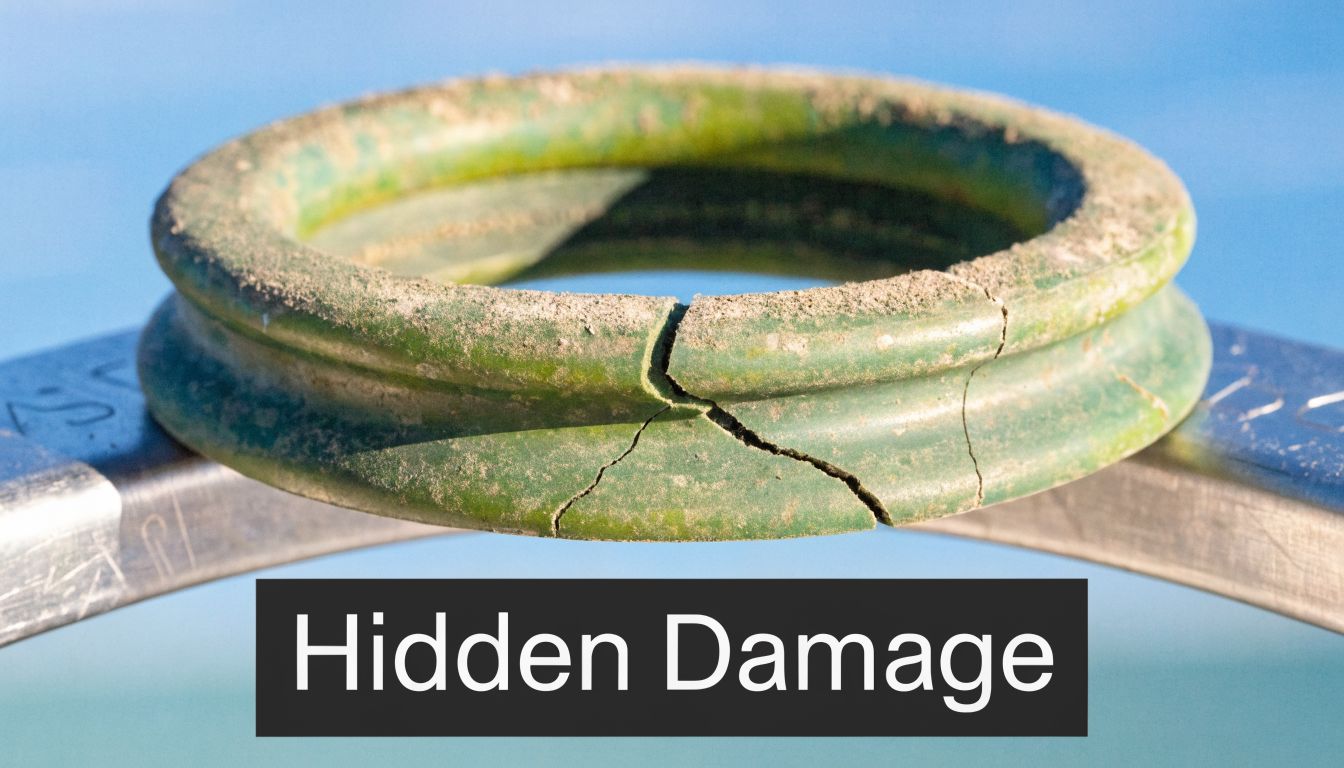
Dishwashers depend on rubber gaskets and seals to keep water where it belongs. Frequent vinegar use can accelerate rubber seal deterioration by 25 to 30%, according to accelerated aging tests referenced in this dishwasher vinegar cleaning guide. The same source notes that appliance warranty data from Statistics Canada shows 12% higher leak failure rates in very hard water provinces such as Alberta and Saskatchewan.
That risk is easy to underestimate because damage builds gradually. A gasket doesn't fail the day you use vinegar. Repeated acid exposure can dry, weaken, or crack soft components over time.
If you're trying to avoid avoidable dishwasher wear, it's also worth reviewing the broader issue of dissolvable films and residues in everyday detergents. This article on the hidden problem with dishwasher pods covers another part of that conversation.
It can clash with your detergent
Vinegar is acidic. Most dishwasher detergents are alkaline. When people combine them in the same wash, they work against each other.
That means two things:
- You don't get the full descaling benefit of the vinegar
- You may reduce the cleaning power of the detergent
This is why pouring vinegar into the rinse aid compartment or adding it during a normal detergent wash isn't the smart shortcut it seems to be.
Residue concerns matter in sensitive homes
For some households, the bigger issue isn't machine wear. It's what ends up on the dishes.
A lot of families turn to vinegar because it sounds gentler than conventional products. But acidity isn't automatically skin-friendly. If someone in your home already reacts to residues, splashes, or harsh formulations, a DIY acid rinse may not feel like the low-irritant answer it promised to be.
Here’s a useful visual explanation before making vinegar part of your maintenance routine:
Stainless steel isn't invincible
Stainless interiors handle normal dishwasher conditions well. They don't love repeated acid misuse. Direct, frequent exposure to vinegar, especially when combined with leftover salt or food residue, can be harder on finishes than people realise.
If a cleaning tip only works when you ignore your dishwasher's seals, dispenser parts, and finish, it isn't a low-risk habit.
That doesn't mean vinegar has no place. It means frequency, method, and household priorities all matter.
The Safest Way to Clean Your Dishwasher with Vinegar
If you're still going to use vinegar in dishwasher maintenance, keep it occasional, keep it separate from dishes, and keep it off the machine's internal dispensers.
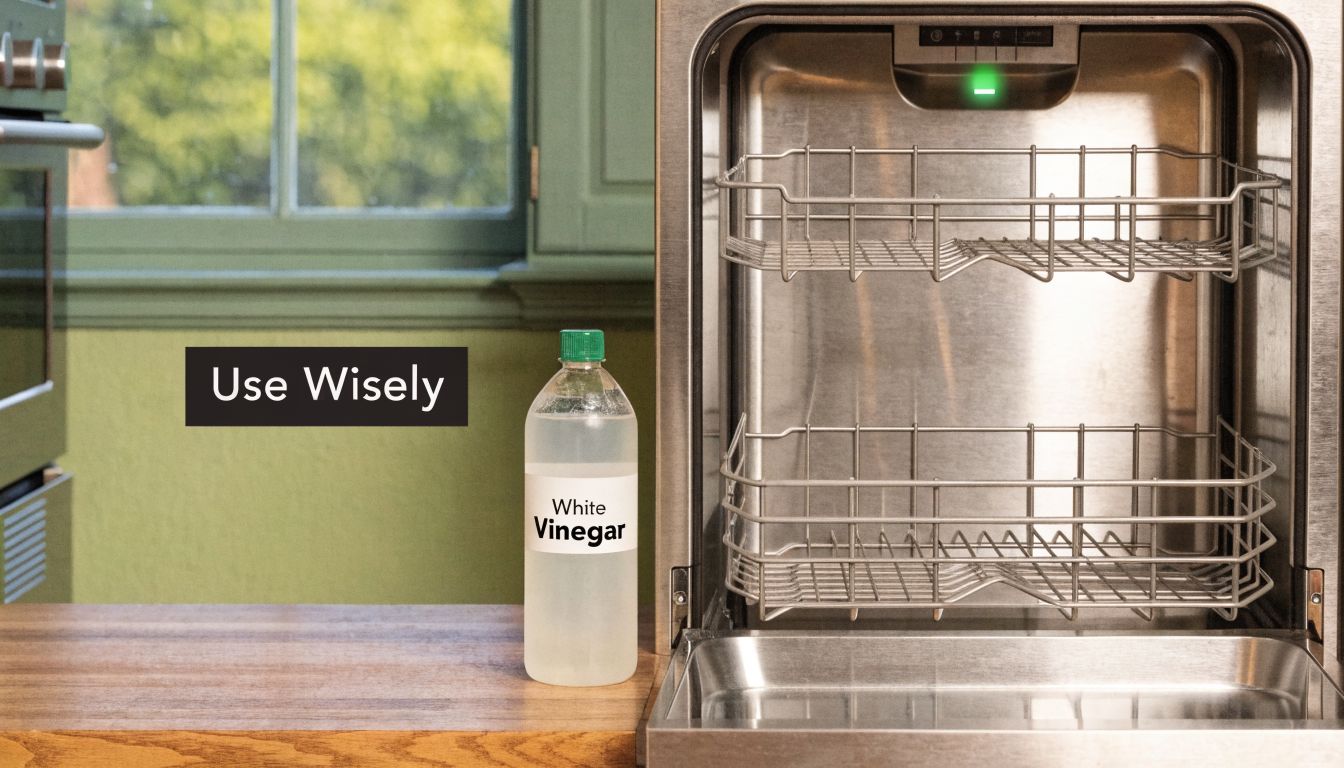
The safest method involves placing 500 mL of white vinegar in a bowl on the top rack during an empty hot cycle at 60°C or higher, as described in the earlier cited dishwasher cleaning guidance. That approach allows acetic acid vapour to target scale without sending concentrated acid directly through pumps or seals.
The lower-risk method
Follow this process exactly:
-
Empty the dishwasher fully
Don't clean dishes and descale at the same time. Keep this as a maintenance cycle only. -
Check the filter first
Remove trapped food, paper labels, and debris. Vinegar doesn't replace basic cleaning. -
Pour white vinegar into a heat-safe bowl
Place the bowl securely on the top rack, not the bottom of the tub. -
Run a hot cycle
Use a hot wash so the vapour can circulate through the interior. -
Skip detergent during this cycle
Acid and alkaline detergent don't belong in the same run.
What not to do
These are the mistakes that create most of the trouble:
- Don't pour vinegar into the rinse aid compartment: that exposes seals and dispenser parts to repeated acid contact.
- Don't splash it directly onto the floor of the dishwasher: concentrated liquid sits where internal components are most vulnerable.
- Don't use it as a weekly habit: occasional maintenance is very different from routine acid exposure.
- Don't mix it with detergent or bleach-based products: keep cleaning chemistry simple and separate.
When vinegar makes sense
A single maintenance cycle can be reasonable when you notice:
- Cloudy glassware from hard water
- Visible mineral buildup
- A stale odour after you've already cleaned the filter
Use vinegar for scale. Use proper detergent for washing. Use a separate maintenance cycle for the machine itself.
That distinction prevents a lot of frustration. Vinegar can help with deposits, but it isn't a complete answer for food soils, family dish loads, or sensitive-skin concerns around residue.
Safer Dishwasher Solutions for Sensitive Households
For many households, the problem with vinegar isn't just the risk. It's the hassle. You have to time it, separate it from detergent, limit how often you use it, and stay mindful of machine wear.
That's manageable for some people. It's not ideal for busy families.
A 2023 Statistics Canada survey showed 35% of fragrance-sensitive Canadian families experiment with vinegar for its natural appeal, but its acidity and potential for skin reactions from residue are concerns. That same finding points to growing interest in pH-neutral, biodegradable tablets that are 100% free of microplastics from PVA film, as noted in the earlier cited dishwasher cleaning guidance.
A better fit for routine dishwashing
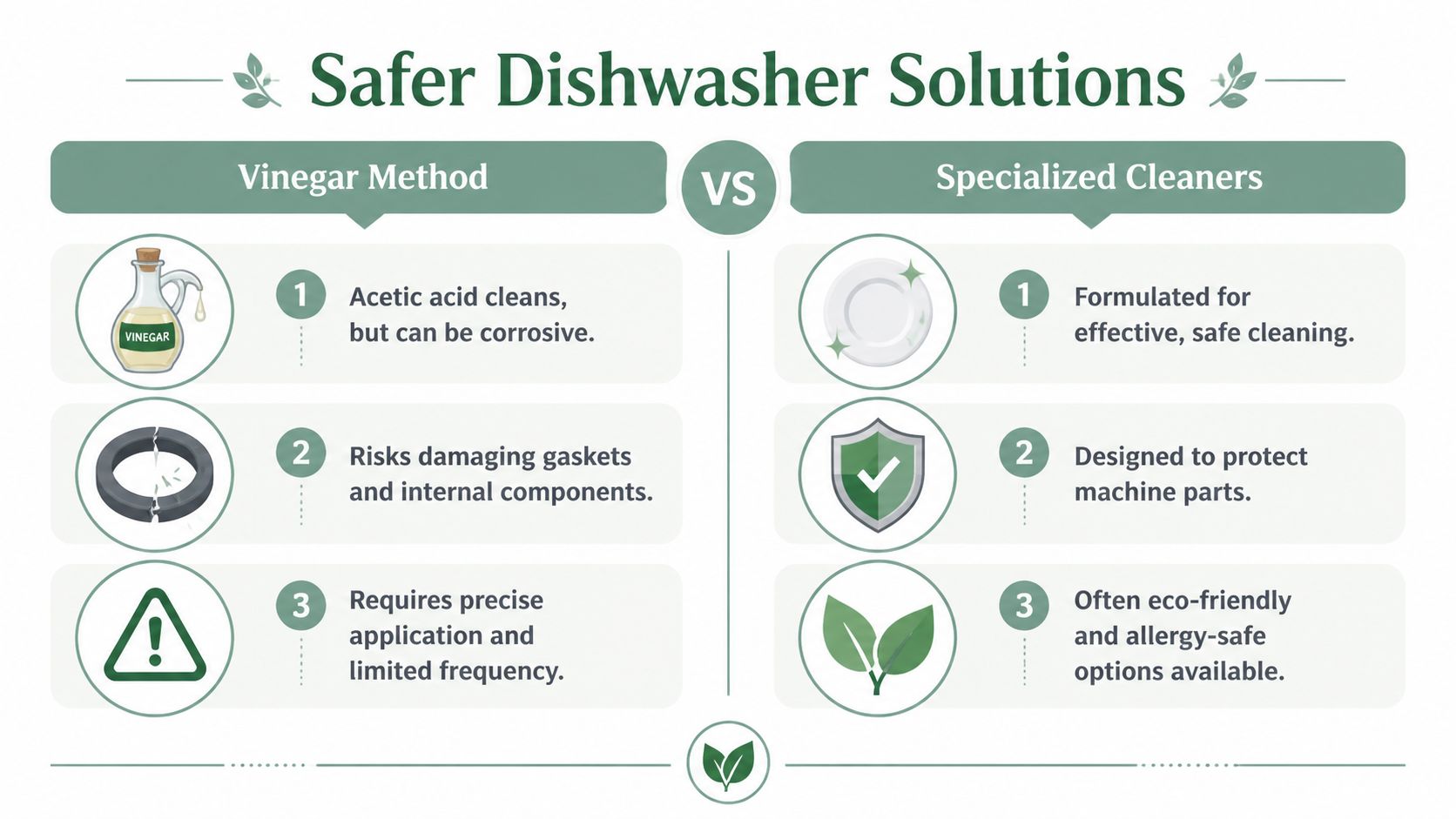
Purpose-built dishwasher products solve a different problem than vinegar. They aren't just there to descale. They aim to remove food soil, rinse cleanly, and work with the machine rather than against it.
If you already use vinegar elsewhere for descaling small appliances, this guide to descaling your Keurig with white vinegar is a useful comparison. A coffee maker has very different materials, flow paths, and cleaning demands than a dishwasher.
For everyday dish loads, many sensitive households do better with products designed around these priorities:
- Fragrance-free rather than unscented: “Unscented” can still include masking agents. Fragrance-free avoids added fragrance ingredients.
- No PVA film: some families want to avoid pods wrapped in dissolvable film.
- Pre-measured format: less mess, less overpouring, and more consistency.
- Clean-rinsing formula: especially helpful when you're washing baby dishes, water bottles, and everyday glassware
Quick comparison
| Option | Main strength | Main drawback | Best use |
|---|---|---|---|
| Vinegar | Helps dissolve mineral scale and reduce odour | Can stress seals and isn't a full detergent | Occasional maintenance only |
| Traditional pods | Convenient and familiar | May include fragrance and PVA film | General use if sensitivities aren't a concern |
| Powder | Adjustable dose | Easy to overuse and spill | Households comfortable measuring manually |
| Fragrance-free PVA-free tablets | Pre-measured, simple, lower-residue routine | Less familiar to some shoppers | Daily dishwashing in sensitive homes |
If you're comparing formats, this overview of natural dishwasher detergent options helps sort through tablets, pods, and other choices without defaulting to DIY hacks.
What works in real life
The best routine is often the least complicated one you can repeat. Use a dishwasher detergent made for regular loads. Clean the filter by hand. Reserve vinegar, if you use it at all, for occasional descaling only.
That approach is easier on both the appliance and the people eating off the dishes.
Frequently Asked Questions About Vinegar in Dishwashers
Can you put vinegar in the dishwasher with dishes inside
It's better not to. Vinegar is most appropriately used in an empty maintenance cycle, not in a regular dish load. If your concern is residue, spots, or sensitivity, separating machine cleaning from dishwashing is the safer approach.
Is white vinegar the right type to use
Yes. If you use vinegar in dishwasher maintenance, plain white vinegar is the standard choice. Avoid scented or infused vinegars.
Can vinegar replace dishwasher detergent
No. Vinegar can help with mineral scale and odours, but it doesn't replace a proper detergent designed to remove grease, food residue, and everyday soils.
Is the rinse aid compartment a safe place for vinegar
No. That's one of the riskiest ways to use it. Repeated acid exposure in that area can be harder on seals and dispenser components.
How often should you clean a dishwasher with vinegar
Keep it occasional. Frequent use creates more downside for the appliance. If you need constant vinegar just to get acceptable results, the bigger issue may be hard water management, detergent choice, or a filter that needs regular cleaning.
Can you mix vinegar with dishwasher detergent
You shouldn't. Vinegar is acidic and dishwasher detergent is usually alkaline. Using them together can reduce how well each one works.
Is vinegar a good choice for sensitive-skin households
Not always. Many people assume natural means gentler, but acidity can still be irritating. If your household is managing eczema, dermatitis, or fragrance sensitivity, a fragrance-free, purpose-formulated dishwasher product is usually the more reliable option.
If you want a simpler dish routine for a sensitive household, Lumehra offers fragrance-free, pre-measured cleaning products designed without dyes, optical brighteners, or PVA film. It's a practical option for families who want effective cleaning without turning to harsh fragrances or risky DIY shortcuts.